One of the most terrifying requirements for a visual artist is writing. An illustrator will confidently spend one hundred hours executing a magnificently complex digital painting, but if an Art Director asks them to write a single 250-word Artist Statement explaining why they painted it, they completely freeze.
The resulting panic usually produces one of two disastrous portfolio outcomes:
- The 'Too Small' Fail: The artist simply writes, "I draw stuff I like. Follow me on Instagram." This projects massive amateurism and guarantees a corporate client will not hire them.
- The 'Too Big' Fail: The artist attempts to sound like a PhD Philosophy professor, using incredibly dense, confusing vocabulary (e.g., "My work interrogates the juxtaposition of ethereal digital liminality against a backdrop of post-commercial dread."). This sounds desperately pretentious and alienates normal buyers.
A B2B Artist Statement is not a college essay; it is a highly-engineered sales document. Here is the exact copywriting formula for writing an Artist Statement that actually connects with buyers and Art Directors.
The 'What, How, and Why' Formula
An elite Artist Statement should never be longer than three small paragraphs. An overworked commercial Art Director does not want to read an autobiography. Structure your text block rigidly across three specific cognitive beats.
Paragraph 1: The 'What' (The Grounding Anchor)
You must immediately ground the reader in physical reality before you discuss emotions. Within the first two sentences, the buyer must know exactly what materials you use and what subjects you paint.
- Bad: "I express my soul through imagery of nature."
- Good: "I am a botanical illustrator specializing in high-contrast vector graphics and large-scale analog watercolor environments." Instantly, the Art Director knows your technical parameters.
Paragraph 2: The 'How' (The Process Authority)
Buyers are fascinated by the mechanical execution of art. If they understand how difficult the process is, they are willing to pay vastly higher commission rates. Briefly explain your specific workflow.
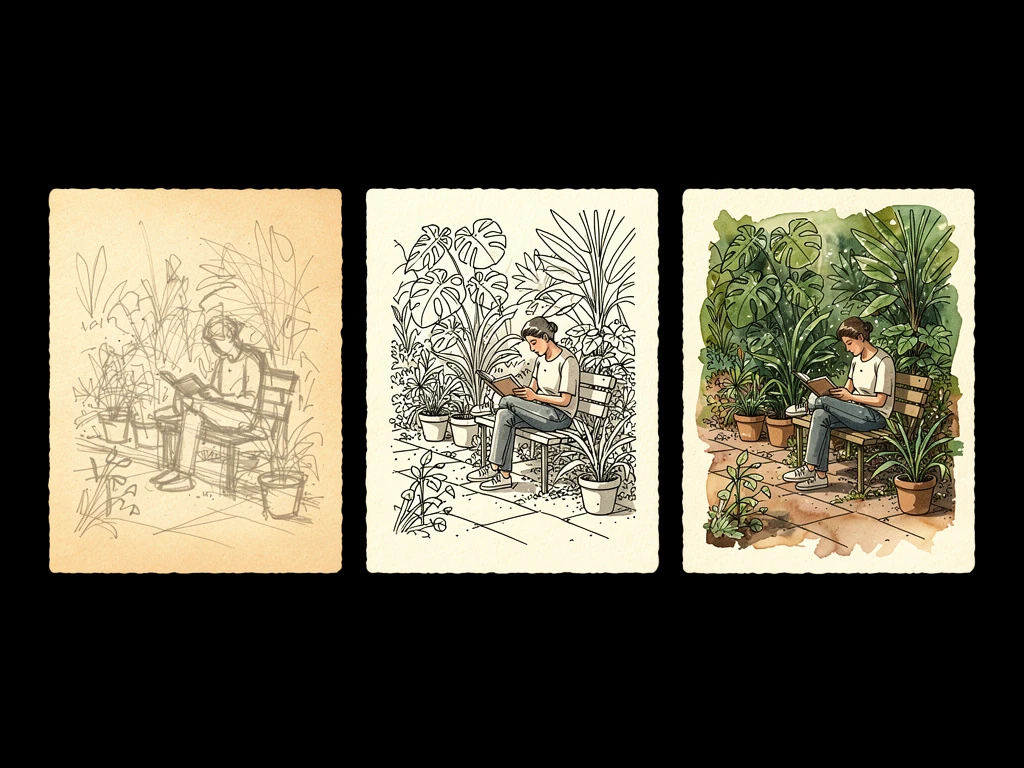
- "My process begins with a rapid, chaotic charcoal under-drawing, establishing the pure kinetic energy of the composition. I then systematically refine the linework digitally, introducing highly saturated, luminous color palettes to force the subject into surreal, hyper-modern spaces." You have just proven immense technical discipline.
Paragraph 3: The 'Why' (The Emotional Hook)
Only after establishing your materials and your process are you legally allowed to talk about your feelings. Why do you choose these subjects?
- "Ultimately, my architectural illustration explores the tension between brutalist urban geometry and the fragile human figures forced to navigate it. I want the viewer to feel profoundly isolated, yet surrounded by overwhelming scale." You have now provided the curator with the emotional thesis required to write a gallery plaque about your work.
The Rule of Third-Person vs First-Person
The tense you use dictates the economic reality of your website.
If you are a commercial illustrator attempting to secure $10,000 corporate retainers from massive publishing houses (like Penguin Random House or Condé Nast), write your Artist Statement in the Third-Person (e.g., "Sarah is an illustrator based in Chicago..."). It creates massive institutional distance, making you sound like a formally incorporated agency vendor.
If you are a Fine Art gallery painter trying to sell a $5,000 physical oil painting directly to an impassioned private collector, use the First-Person (e.g., "I spend months crafting these landscapes..."). It creates deep, intimate emotional friction, making the collector feel personally bonded to you before they make the purchase.
Translating your artistic soul into corporate legibility requires pristine typological architecture. By leveraging the elegant, native typography blocks inside Portfoliobox, illustrators natively embed highly-structured, perfectly weighted Artist Statements into their B2B portfolios without sacrificing an ounce of visual grace — no coding required.