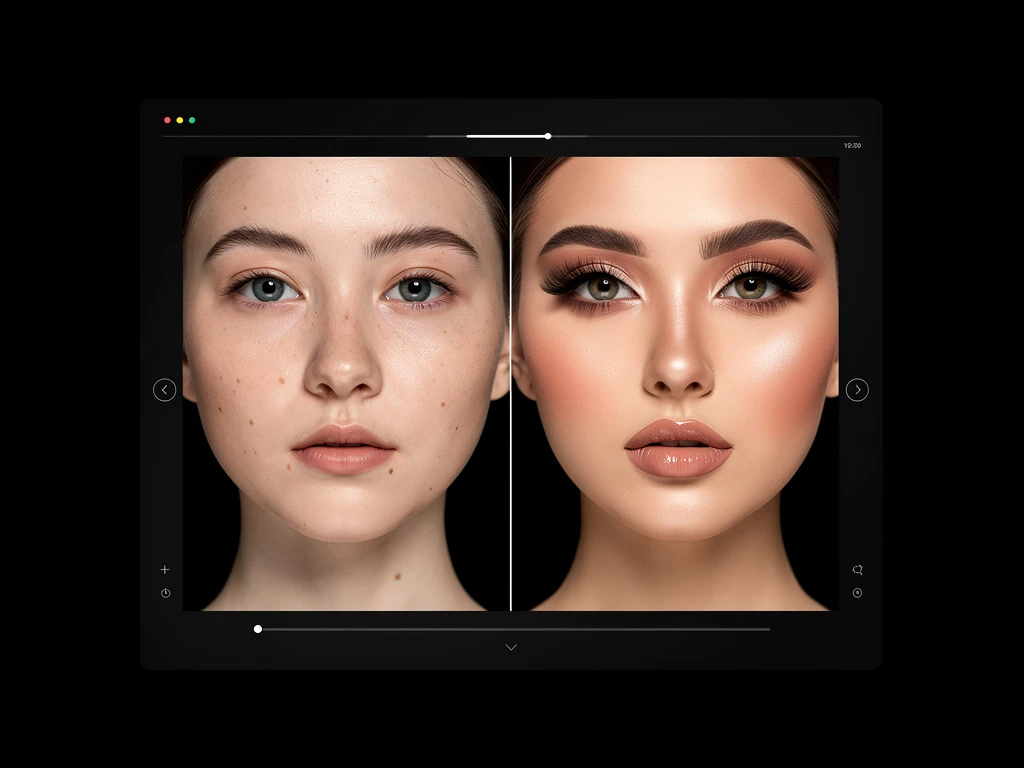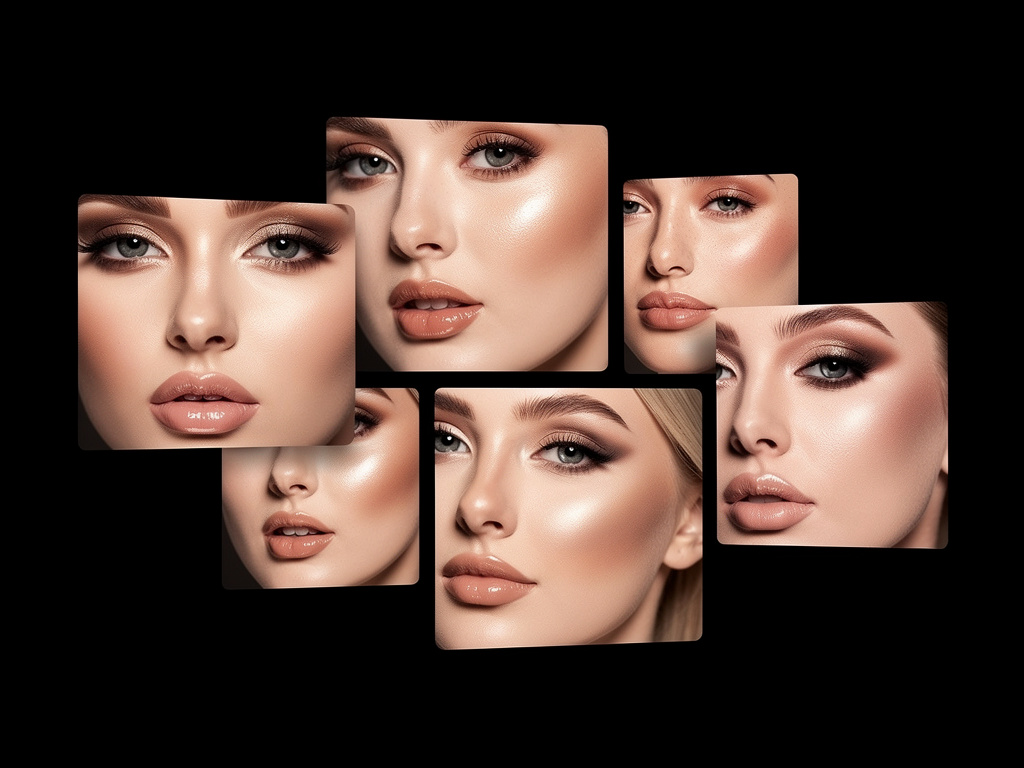
The core currency of a professional Makeup Artist (MUA) is texture.
Unlike fashion stylists who rely on full-body silhouettes, or landscape architects trying to capture massive geographic spaces, a beauty MUA's entire career exists in a six-inch space between the model's forehead and their chin.
When you execute a flawless, high-end editorial look, your success depends entirely on how the camera captures the microscopic gradient of the eyeshadow, the exact viscosity of the lip gloss, and the seamless chemical blending of the foundation on the epidermis.
However, many MUAs spend thousands of dollars hiring elite beauty photographers, only to upload those massive, breathtaking 4K photos to a generic website builder that aggressively compresses the images. Instantly, the flawless skin texture is violently crushed into pixelated, muddy blocks. Your elite skill is erased by bad server technology. Here is exactly how MUAs must format and host high-resolution beauty portraits to preserve their B2B value.
The algorithmic 'Compression' Threat
A massive TIFF or JPEG file from a professional beauty photographer can easily be 30 Megabytes in size.
If you upload twenty of these massive files to a single scrolling homepage on a generic website platform (like Wix or standard WordPress), the web server panics. To prevent the website from taking ten seconds to load, the platform's background algorithm automatically triggers "Lossy Compression."
This algorithm permanently deletes massive amounts of pixel data from your photograph to make the file smaller. To a casual viewer, a compressed image of a mountain might look fine. But to a luxury cosmetic casting director, a compressed macro beauty shot looks disastrous. When they zoom in to check your foundation blending, they see jagged digital "artifacts."
The Solution: You must utilize a portfolio platform explicitly engineered for uncompressed visual data. You require an "Unmetered Content Delivery Network" (CDN) that mathematically respects the original fidelity of your upload, refusing to sacrifice your skin texture for server speed.
The Rule of the 'Uncropped Masonry Grid'
Beauty photography rarely conforms to a perfect 1:1 Instagram square.
Some images are extreme horizontal crops highlighting just the model's eyes. Other images are incredibly tall, vertical portraits showcasing complex, towering hair designs alongside the makeup.
Many website builders force all uploaded images into identical square boxes to make the layout look "tidy." If the builder aggressively auto-crops the top of your model's head off, it destroys the composition the photographer worked so hard to achieve.
The Solution: MUAs must mandate the use of 'Uncropped Masonry Grids'. This specific grid logic intelligently builds the layout around the native dimensions of your photographs, guaranteeing that 100% of your artistic composition is displayed flawlessly across both wide desktop monitors and narrow mobile screens.
Implementing 'Visual Silence'
Because beauty photography is inherently loud—often featuring high-saturation colors, glossy textures, and intense eye contact—the actual website surrounding the images must be violently silent.
The Oversight: Amateur MUAs often try to match the "glamour" of their makeup by utilizing pink website backgrounds, cursive handwriting fonts, and chaotic drop-shadows on their images. This immediately cheapens the aesthetic.
The Solution: Treat your high-resolution beauty portraits like multi-million dollar paintings in an art gallery. The walls (the background) must be pristine white or absolute black. The plaques (the typography) must be incredibly thin, rigid sans-serif text. By deploying minimal UI over your massive, uncompressed photography, you instantly project corporate luxury.
Securing elite agency representation requires a digital foundation that respects your craft. By launching your makeup portfolio on Portfoliobox, beauty professionals guarantee their massive 4K macro-photography is hosted uncompressed, beautifully uncropped, and framed by institutional silence — no coding required.