The luxury beauty industry operates on an incredibly high threshold of anxiety. If a bride hires the wrong florist, her wedding reception might look slightly underwhelming. If a bride hires the wrong Makeup Artist (MUA), she hates every single photograph taken of her face for the rest of her life.
Because the stakes are physically attached to the client's identity, hiring an MUA requires immense psychological trust. A beautiful digital portfolio proves that you are capable of doing makeup, but it does not prove that you show up on time, act professionally under pressure, or respect sanitation protocols.
To bridge this massive trust gap, an MUA must weaponize the 'Client Testimonial'. However, if you simply dump a massive wall of text onto your website detailing how nice you are, you dilute your luxury branding. A testimonial must be treated as a strategic architectural asset. Here is the blueprint for converting client praise into massive financial retainers.
Eradicating "Blind Praise"
Many MUAs simply grab screenshots of generic Instagram comments ("Omg, love this look!") and paste them onto their websites. This is called 'Blind Praise', and it is utterly useless to a commercial hiring director.
A high-converting testimonial must explicitly highlight a logistical benefit. When asking past clients or commercial producers for a review, actively guide their response. Ask them: "Could you specifically mention how my sanitation protocols made your talent feel safe on set?"
The Conversion Metric: If a bridal planner reads a testimonial stating: "Jessica executed flawless makeup for nine bridesmaids while running exactly twenty minutes ahead of our production schedule," that planner will hire you instantly. You solved their logistical nightmare. Punctuality and hygiene are infinitely more valuable text assets than generic praise about your eyeshadow blending.
The Law of Photographic Anchoring
A testimonial is completely powerless if the website viewer assumes you fabricated the quote yourself.
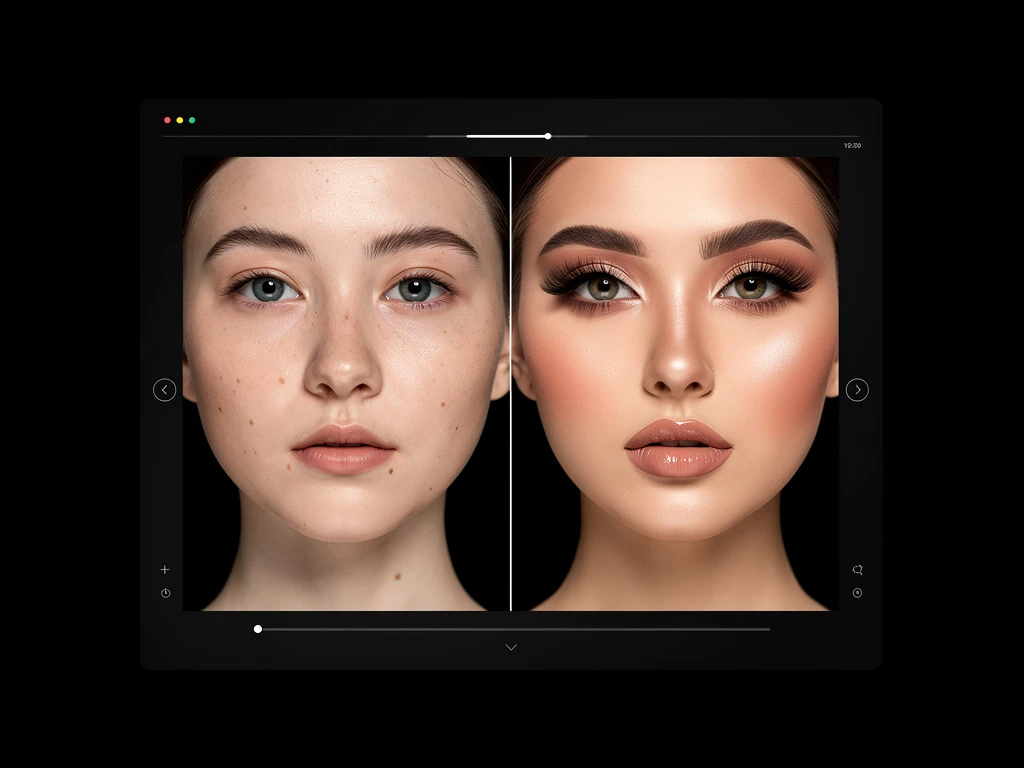
To legitimize a glowing review, you must deploy "Photographic Anchoring." Never place a text testimonial floating alone on a blank white page. You must structurally attach the quote directly to the visual proof of that exact client's face.
The Layout Protocol: If a CEO gives you an incredible review detailing your utter professionalism during their corporate headshot session, layout their specific, brilliantly lit headshot on the left side of the web column. On the right side, implement a stark, elegant Serif font explicitly quoting their review underneath their corporate title (e.g., - Marcus V., Chief Financial Officer). Tying the text directly to the high-resolution execution makes the praise undeniable.
Embedding Testimonials in the 'Booking Funnel'
The most tragic layout error an MUA can commit is hiding their best testimonials on a dedicated "Testimonials Page" that nobody ever clicks.
You must intercept the client at their point of highest anxiety. In the beauty industry, the point of highest anxiety is the exact second the client is asked to type in their credit card for a deposit.
The Funnel Fix: Take the single most powerful, authoritative review you possess—ideally from a highly recognizable corporate brand or a famous wedding planner—and embed it directly onto your "Contact / Booking" page. Place it exactly one inch above the "Submit Questionnaire" button.
Right as the client hesitates to submit their massive bridal package request, they read a quote affirming your absolute mastery of the craft. The hesitation vanishes, and the booking is secured.
Converting anxiety into corporate trust requires immaculate typographical control. By migrating your beauty presence to Portfoliobox, MUAs gain access to strictly formatted text-and-image grids, effortlessly anchoring high-end client testimonials directly into their booking funnels — no coding required.