The transition from art school to the professional freelance world is notoriously brutal. Every year, thousands of highly talented illustrators graduate, launch their websites, and then hear absolutely nothing but silence from art directors.
The problem is rarely a lack of talent. The problem is that a graphic design student portfolio is fundamentally structured to please professors, not commercial clients. Professors grade you on versatility, academic exploration, and meeting syllabus requirements. Commercial art directors hire you to solve specific business problems. If you want to survive your first year as a freelancer, you must strip away the academic fluff and rebuild your presentation. Here is a deep dive into exactly how to transform your student portfolio into a professional booking engine.
Step 1: Eliminate the "Academic Evidence"
In school, you are forced to prove that you can use different mediums. You take a typography class, a 3D modeling class, and a traditional life-drawing class. Your professors force you to put all of it in your graphic design student portfolio to prove you learned the software.
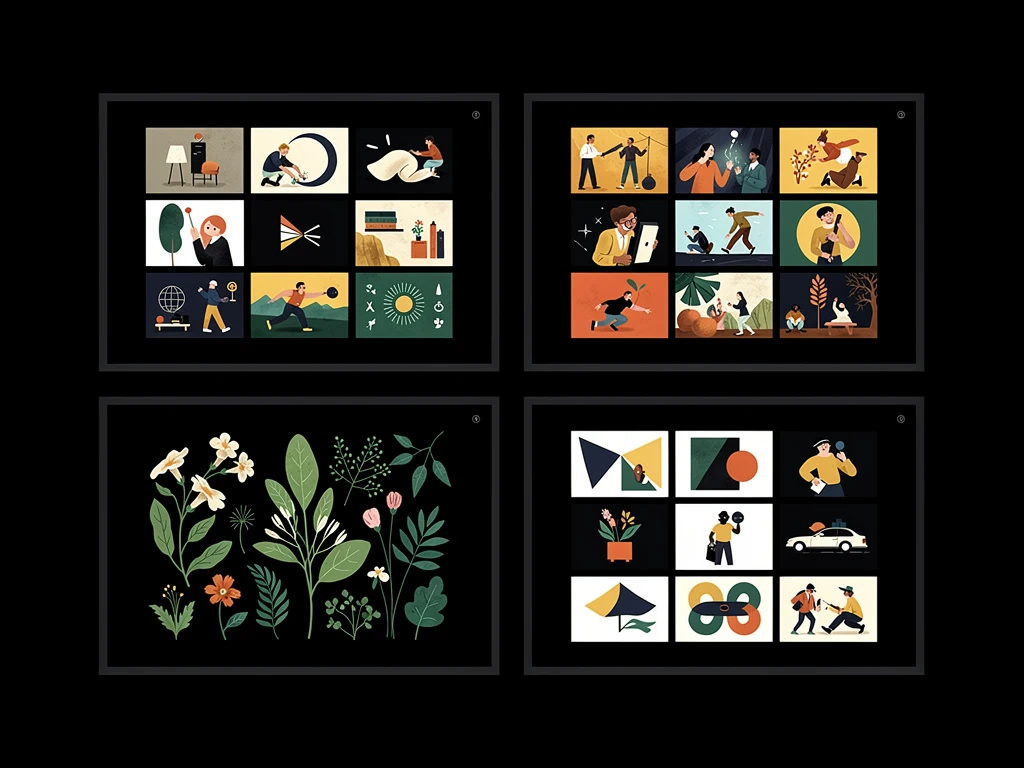
The Professional Upgrade: An art director at a children's book publisher does not care that you know how to use Maya to model a 3D donut. They only care if you can paint whimsical, engaging characters. Remove all the "filler" projects you did just to get a grade. If you want to be a 2D illustrator, delete the logo designs and the web-coding projects. Ruthlessly narrow your focus to the exact type of jobs you actually want to be hired for.
Step 2: Ditch the "Faux Projects" for "Case Studies"
Student portfolios are filled with fake projects (e.g., "I redesigned the Nike logo for a class assignment"). While acceptable for students, presenting these without context in the professional world looks amateurish.
The Professional Upgrade: You can keep the faux projects, but you must reframe them as professional "Case Studies." Do not just upload the final illustration. Write out a hypothetical creative brief. Explain the target demographic you were designing for. Show the rough thumbnail sketches and the color exploration that led to the final piece. Treat the fake project with the exact same strategic rigor you would apply to a real $10,000 corporate contract.
Step 3: Upgrade Your Digital Real Estate
Many students build their portfolios on free university servers or use generic, free website builders that plaster third-party ads across the top of their artwork.
The Professional Upgrade:
You cannot command professional rates if your website URL ends in .freewebsitebuilder.com. You must purchase a custom domain (yourname.com). Furthermore, you must migrate to a premium platform that does not compress your high-resolution illustrations. When an art director zooms in on your work, the brushstrokes must be crisp, not pixelated by a cheap server.
Step 4: The Frictionless Contact Form
A graphic design student portfolio usually just has a link to an Instagram page or a generic email address hidden at the bottom of a bio.
The Professional Upgrade: Your website is now a sales tool. You need a dedicated "Contact" page featuring a clean, professional form. Ask for the client's timeline, budget, and project scope. Include strong Call to Action (CTA) buttons at the end of every illustration gallery telling the client exactly how to hire you.
Graduating is only the first step. To establish a legitimate career, you need a legitimate platform. With Portfoliobox, you can effortlessly transition from student to professional, building a stunning, agency-grade illustration website in minutes — no coding required.