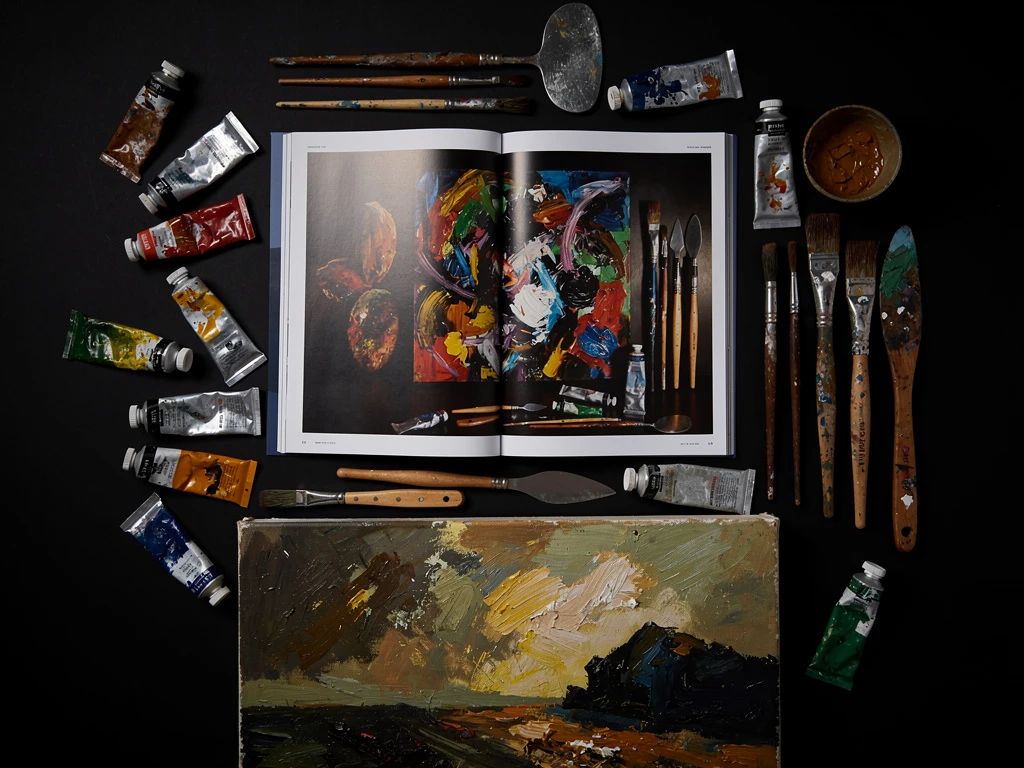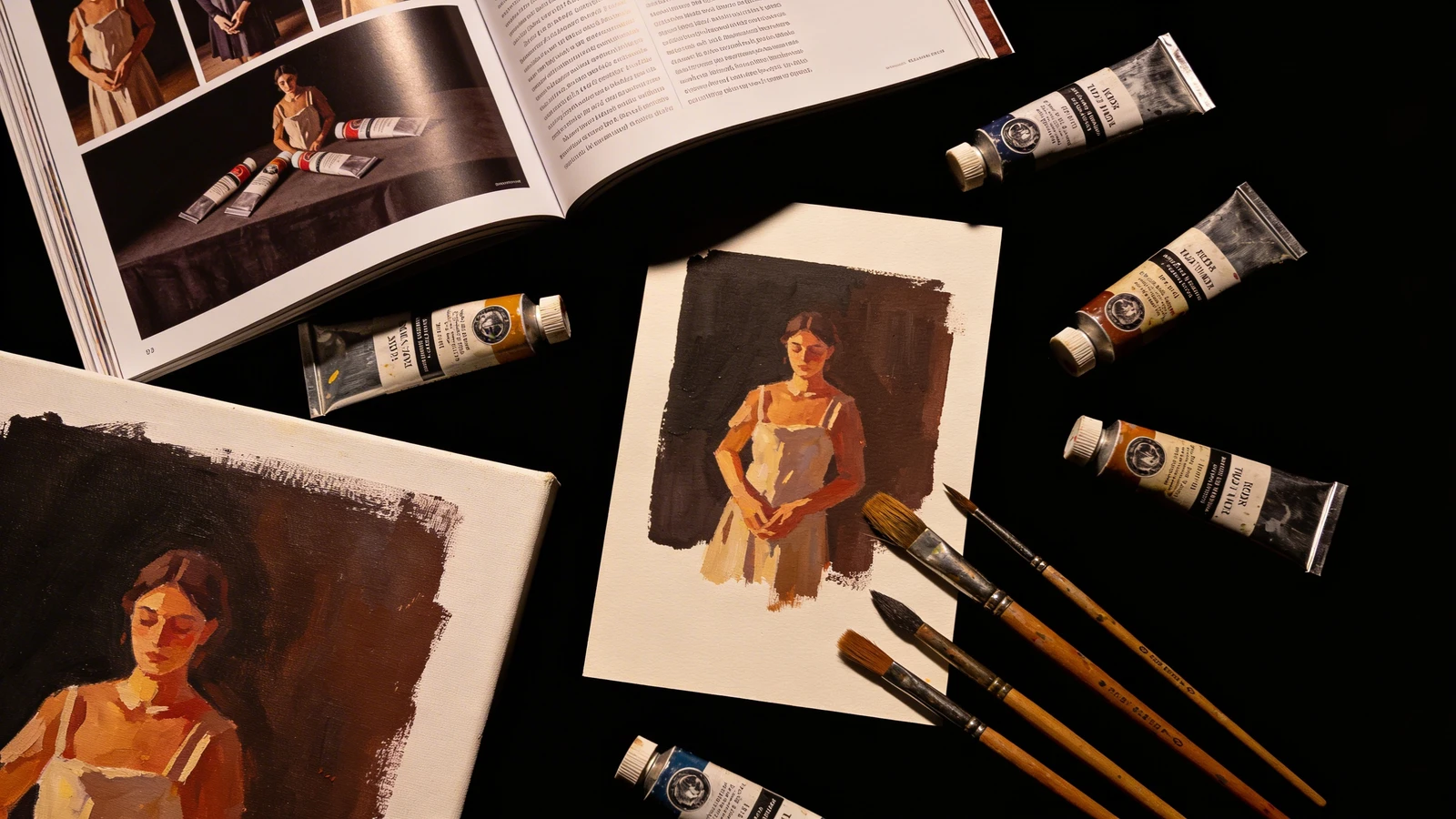
For the first four years after art school, I struggled immensely. I was painting large-scale, atmospheric oil landscapes, but my career was completely stagnant. I wasn't selling originals, and galleries were ignoring my submission emails.
I blamed the market. I blamed the algorithm. I blamed everything except the actual problem: my website. My digital portfolio was a messy, standard template with a white background and a rigid grid of poorly lit photos of my paintings. The turning point in my career didn't come from changing my painting style; it came from studying high-end art portfolio examples from established, successful fine artists. Here is what those examples taught me, and how applying their secrets transformed my career.
1. The "Invisible White Cube" Strategy
The first thing I noticed when looking at top-tier art portfolio examples was the absence of "web design."
Amateur artists try to make their website look creative by using textured backgrounds, wild fonts, and complex menu animations. Established fine artists use the "White Cube" strategy. Just like a high-end contemporary art gallery in New York, their websites feature stark white (or pure black) backgrounds, minimalist geometric typography, and massive amounts of empty space around the images.
How I Applied It: I stripped everything off my website. I removed my "creative" logo and just used my name in a clean, sans-serif font. I increased the padding around my images by 200%. Suddenly, my paintings stopped fighting the website design. The artwork became the sole focus, instantly making it look more expensive.
2. Contextualizing the Scale
My old portfolio consisted of flat, cropped JPEGs of my paintings. A gallery curator had no idea if the painting was 8 inches wide or 8 feet wide without reading the fine print.
The best art portfolio examples never leave scale to the imagination. They contextualize the physical object.
How I Applied It: I stopped just uploading the flat scan of the painting. For every major piece, I included a secondary photograph of the painting hanging on a wall in a beautifully lit, modern living room. I also included a photograph of myself standing next to the canvas while painting it. This immediately communicated the massive scale of my work, which is exactly what gallery curators and high-end interior designers are looking for.
3. Highlighting the Texture (The Macro Shot)
Fine art is tactile. When you only show a wide shot of a painting on a screen, the physical texture—the thick impasto brushstrokes, the pooling of the glazes—is completely lost.
The most successful artists treat their paintings like sculptures. They understand that texture sells the original piece.
How I Applied It: I bought a cheap macro lens for my camera. Next to every wide shot of my painting, I uploaded a high-resolution, extreme close-up showing the physical ridges of the dried oil paint. It proved to collectors that they were buying a physical, handcrafted object, not just a digital image.
4. The "Frictionless Acquisition" Funnel
I used to think making it "hard" to buy my work made me seem more exclusive. If someone wanted a painting, they had to email me, wait for a reply, and send a wire transfer. I lost countless sales to this friction.
The top art portfolio examples I studied seamlessly integrated commerce. How I Applied It: I added a built-in e-commerce store to my portfolio. I clearly listed the prices of available originals and offered high-quality archival prints. If a collector was emotionally moved by a painting at 2:00 AM, they could purchase it instantly with a credit card.
Within six months of rebuilding my presentation based on these structural rules, I sold my first major original online and secured representation with a boutique gallery. If you want to elevate your career, you need the right platform. With Portfoliobox, you can easily replicate these high-end art portfolio examples and build an agency-grade digital gallery in minutes — no coding required.