Refund policy & order cancellations
This article is about the refund and cancellation policy you set for customers of your own store, not Portfoliobox's refund policy for your subscription. If that's what you're looking for, see Refund Policy.
Set your store's refund and cancellation policy
Before you start selling, write your own return, refund, and cancellation policy so customers know what to expect before they buy.
- Click Settings at the top right of the admin panel.
- Click E-Commerce Settings → General Settings.
- Fill in the Return policy field with your return and refund terms.
- Fill in the Terms and Conditions field with your general terms, including how customers can request a cancellation.
See General Store Settings for the full list of fields in this panel. You can also link your policy from your site footer or cookie message — see Add policies and terms to your site.
Tip: Some products are exempt from the standard EU right of withdrawal; for example, custom-made items, perishables, or digital content that's fully delivered with the customer's consent. If you sell these, state the exemption clearly in your policy. If you're unsure whether your products qualify, we recommend speaking with a legal professional.
Handling a cancellation or refund request
Portfoliobox doesn't currently have a self-service "cancel my order" button for customers on the storefront, so cancellation and refund requests are handled manually:
- Find the order: go to Libraries & Tools → All Orders under E-Commerce Archives. See Find your orders.
- Issue the refund through your payment provider: Stripe, PayPal, or directly with the customer for invoice payments. See Refund an order.
- Update the order status: open the order, go to Change Status, and set the payment status to Refunded or Cancelled. See Manage your orders.
- Delete the order if needed: only once it's no longer needed for your records, since deletion is permanent. See Delete an order.
EU requirement: the withdrawal button (from 19 June 2026)
Directive (EU) 2023/2673 updates the EU Consumer Rights Directive. From 19 June 2026, any business selling goods, services, or digital content online to EU consumers must provide a clear, electronic way for customers to withdraw from a purchase directly on the website, often called the "withdrawal button." There's no exemption for small businesses, and it applies regardless of where your business is based, as long as you sell to EU consumers.
Key requirements:
- Easy to find: a clearly labelled button or link, visible on every page (the footer is the typical placement), available throughout the customer's 14-day withdrawal period. A subtle text link isn't enough; it needs to be visually prominent.
- Two-step confirmation: the customer clicks the withdrawal function, enters basic details (such as order number and email), and confirms. You can ask for extra information, like a reason for withdrawal, but you can't make it mandatory.
- Automatic confirmation: the customer must receive an electronic confirmation of their withdrawal request without delay, for example, by email.
Non-compliance can lead to legal warnings, fines (up to 4% of annual EU turnover in some member states), and an extended withdrawal window of up to 12 months and 14 days if the function is missing or doesn't work properly. If you're unsure how this applies to your store, we recommend speaking with a legal professional familiar with EU consumer law.
Setting this up on your Portfoliobox store
1. Create a cancellation/withdrawal request page
- Click Create → Blank, give the page a title (e.g. "Cancellation Request"), and click Create Page.
- Click Add Section → under Text & Headings, select Contact, and choose a template. (You can also right-click an existing element → Add Element → Form → Add next to Contact Form.)
- Add the fields you need to identify the order: right-click the form → Change content → Add New Field, and add fields such as First Name, Last Name, Email address, Order number, Purchase date, Reason for cancellation, and Additional comments.
- Click Publish.
Keep "Reason for cancellation" toggled as optional. Under the directive, you can ask for it but can't require it; only name, order details, and an email address can be made mandatory.
You can see an example of this kind of setup on our demo site: specimen.portfoliobox.net/cancellation-request.
Form submissions are sent to your account email and saved under Libraries & Tools → Archives → Messages (see Access, delete and export contact form messages). Since this doesn't automatically notify the customer, send them a confirmation email yourself once you receive a request, to meet the directive's automatic-confirmation requirement.
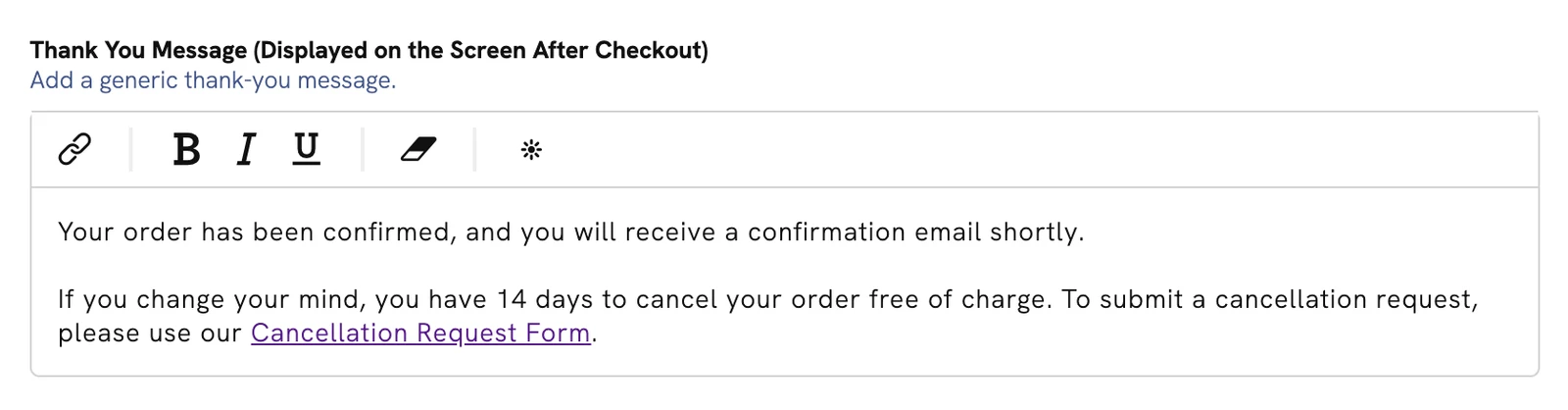
2. Link the page from your thank-you message
- Click Settings → E-Commerce Settings → General Settings
- In the Thank you message field, add a line and link to your new cancellation request page (e.g. "Need to cancel? Submit a withdrawal request here.").
3. Add a button to your site footer
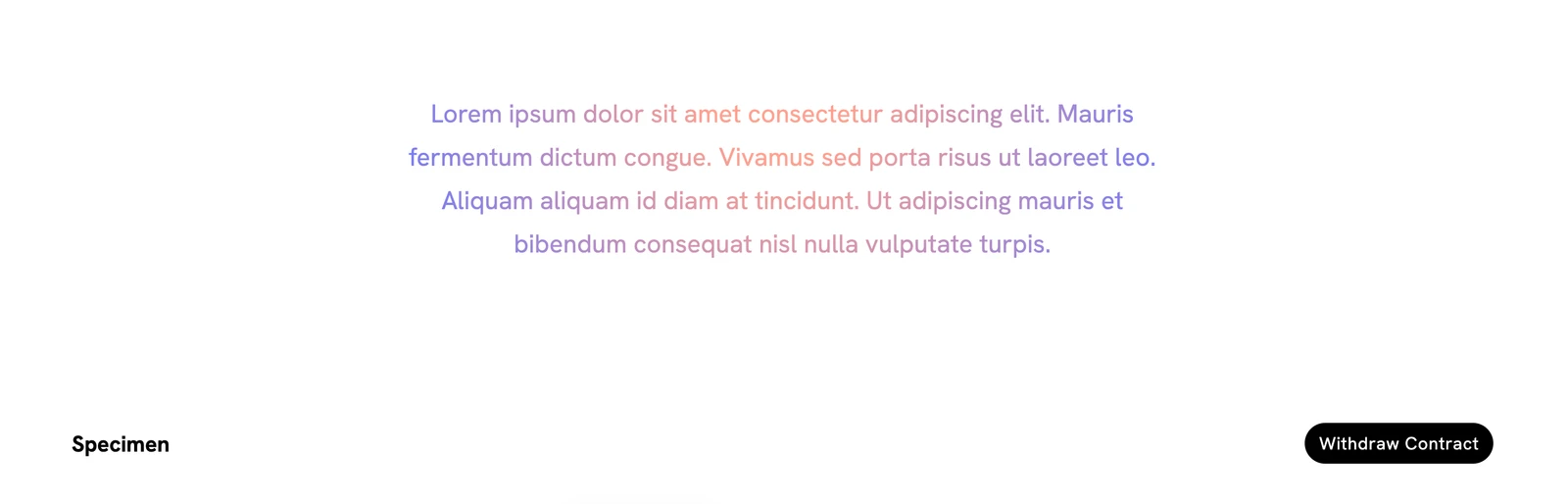
Because your footer appears on every page, it makes the request page accessible "from every subpage," as the directive requires.
- Scroll to the bottom of any page and click Add a Footer, then choose a content block.
- Right-click the footer element → Add Element → under Links, choose Button.
- Right-click the button → Change Content → Link to → One Of Your Pages → select your cancellation request page, then confirm.
- Give it a clear label, such as "Cancel / Withdraw Order," rather than something vague like "Contact."
- Right-click the button → Styles to make it stand out visually. A plain text link isn't considered sufficient under the directive.
You can also spell out the withdrawal process and 14-day window in the Return Policy / Terms and Conditions fields (see above).
Related articles
- General Store Settings
- Manage your orders
- Refund an order
- Delete an order
- Add policies and terms to your site
- Create a contact form
- Add a Button
- Add a footer to your website
- Access, delete and export contact form messages