The single fastest way a model destroys their career trajectory is by failing to understand their physical archetype.
In the modelling industry, there is an absolute, rigid dividing line between two worlds: Commercial Modeling and Editorial Modeling.
Commercial modeling sells a lifestyle (e.g., a smiling family eating cereal, a fitness model drinking a protein shake, a friendly catalog model wearing a winter coat). Editorial modeling sells a fantasy (e.g., a severe, unsmiling model contorted into an impossible pose wearing a $30,000 avant-garde gown on the cover of Vogue).
If you attempt to use the exact same digital layout to solicit an editorial booking that you used to solicit a commercial booking, you will secure neither. Your digital portfolio must actively mirror the psychological aesthetic of the market you are targeting. Here is the architectural solution to the Editorial vs. Commercial portfolio layout.
The Commercial Layout: Warmth, Volume, and Trust
A commercial casting director at a massive retail brand (like Target or Gap) is looking for relatability. They want to see that you look like the ideal consumer.
The Visual Strategy: If you are building a Commercial portfolio, your layout must project warmth and volume.
- Use tightly packed, vibrant masonry grids.
- Your primary "Hero" images should feature direct eye contact and a brilliant smile.
- The background of your website should ideally be a bright, crisp white to reflect a clean, corporate aesthetic.
The navigation should be explicitly categorized by consumer archetype: Fitness, Lifestyle, Swimwear, Corporate. You are proving to the commercial director that you can easily slot into any standard advertising campaign without alienating the consumer.
The Editorial Layout: Severity, Silence, and Space
An Editorial casting director in Milan or Paris does not care if you look friendly. They care if you can elevate a bizarre, experimental piece of clothing into high art.
If you send them a portfolio link full of bright, smiling catalogue pictures, they will instantly perceive you as "too commercial" and reject you.
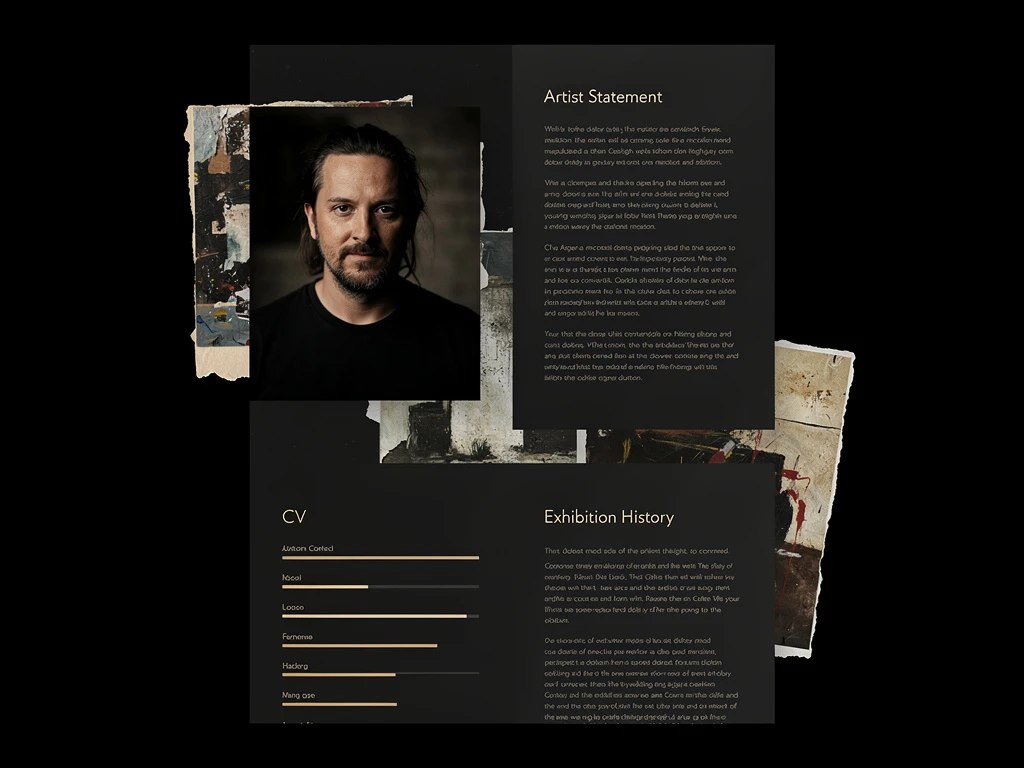
The Visual Strategy: An Editorial modeling portfolio must be brutally minimalist, borderline intimidating.
- Do not use dense image grids. Utilize severe, massive negative space. Your photographs should float alone on the screen, mimicking the sparse layout of a high-end fashion magazine spread.
- Your primary "Hero" image should be incredibly edgy—perhaps you are not looking at the camera, your body is angular, and the lighting is high-contrast black-and-white.
Editorial layouts often thrive in "Dark Mode" (black backgrounds with white text). The navigation should not list "Fitness" or "Lifestyle." It should simply state: Tearsheets, Digitals, Covers. You are selling exclusivity, not relatability.
The Dual-Market Solution (The Hybrid Portfolio)
What do you do if you are a "unicorn"—a model versatile enough to book a highly lucrative commercial catalogue campaign on Monday, and walk an aggressive editorial runway in Paris on Friday?
You must architect a 'Split-Funnel' website.
Do not mix your smiling commercial photos directly next to your severe editorial photos on the same scrolling page. It causes massive cognitive dissonance for the casting director.
The Structural Fix: Your homepage should feature two distinct, massive entry buttons: [Editorial] and [Commercial]. The absolute second a user clicks Editorial, they enter an exclusive, minimalist gallery silo filled only with high-fashion tearsheets. If they click Commercial, they enter a bright, vibrant silo showcasing your modeling templates and lifestyle campaigns.
By aggressively siloing your disciplines, you ensure that the high-fashion director never accidentally sees your generic catalogue work, protecting your elite aesthetic integrity.
Building a website that understands the nuance of high-fashion psychology requires elite formatting tools. With Portfoliobox, models can effortlessly deploy strict 'Dark Mode' editorial templates or vibrant commercial masonry grids, siloing their brand perfectly to secure global campaigns — no coding required.