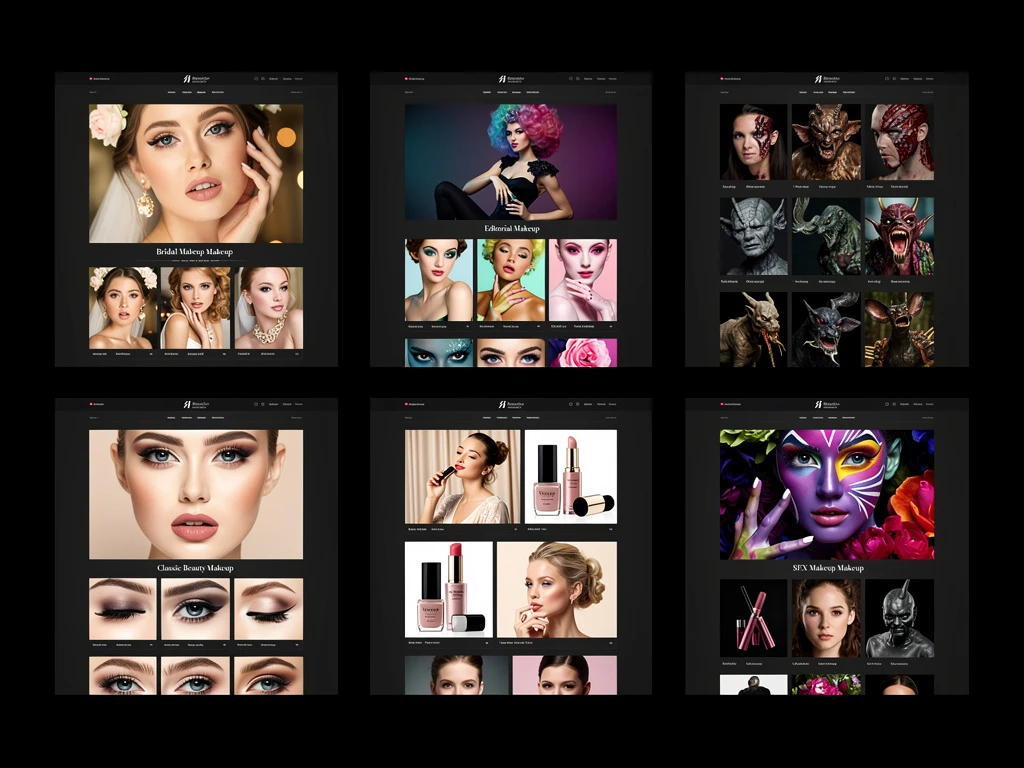
For decades, the physical portfolio was the ultimate status symbol in the beauty and fashion industry. A makeup artist (MUA) would walk into an agency casting clutching a massive, leather-bound book filled with 11x14 glossy tear sheets carefully slid into acetate sleeves. It was tactile, expensive, and essential.
Today, if you walk into a commercial casting call with only a physical book, the creative director will likely look at you with polite confusion. The industry has experienced a massive paradigm shift. In the battle of the physical portfolio vs digital, digital has definitively won. Here is a deep dive into why the industry's top makeup professionals have entirely moved their presentation online.
The Death of the "Drop-Off"
Historically, agencies required artists to "drop off" their physical book at the front desk. An art director would review it on their own time, and the artist would return a few days later to pick it up.
This practice is entirely dead. Art directors and producers are busier than ever. They do not have time to manually flip through leather binders. They cast campaigns rapidly via email, sharing links to digital portfolios with clients on different continents. If you cannot send a sleek, high-resolution link to your work instantly, you cannot be pitched for the job.
The Requirement of Motion
Perhaps the most fatal flaw of the physical portfolio is its inability to show motion.
Modern makeup artistry—especially in commercial and editorial sectors—relies heavily on how the makeup performs under lighting and movement. A digital portfolio allows you to seamlessly integrate video. You can showcase a short cinemagraph of a model turning her head, proving that your highlighter blending is flawless from every angle. A static printed photo simply cannot compete with the dynamic proof of a high-resolution video reel.
The Cost of Iteration
A physical portfolio is incredibly expensive to maintain. Every time you have a new test shoot or a new magazine publication, you have to pay for high-end photo printing, wait for it to arrive, and manually reorder your physical book.
A digital portfolio is instantly iterative. You can upload a new tear sheet from your phone while on set, and your entire presentation is updated globally within seconds. Furthermore, a digital portfolio allows you to create specific, hidden galleries tailored for a single client (e.g., creating a "Skincare Focus" page to pitch to a cosmetic brand) without physically rearranging your entire book.
High-Resolution Rendering Has Surpassed Print
There used to be an argument that a high-quality physical print offered better color accuracy than a computer monitor. That is no longer true. Modern Retina displays and high-end smartphone screens render the nuances of your skin work, the exact shade of your color grading, and the macro texture of your artistry with breathtaking clarity.
The Verdict
While keeping a small, beautifully printed book as a personal keepsake is a lovely tradition, relying on a physical portfolio for your business is career suicide. The industry demands speed, motion, and instant accessibility.
If you are ready to modernize your presentation and ensure you are considered for top-tier campaigns, you must move online. With Portfoliobox, you can build a stunning, agency-ready digital portfolio in minutes — no coding required.