In the fashion and commercial modeling industry, your digital presence is arguably more important than your physical composite card. When a casting director or a brand manager is looking to hire talent for a campaign, they will review hundreds of digital portfolios in a single afternoon. They are making split-second decisions based on visual impact and usability.
If your website is slow, cluttered, or confusing, they will simply close the tab and move on to the next model. A successful model portfolio website is not just a digital photo album; it is a highly optimized sales tool designed to remove all friction from the booking process. If you want to stop losing jobs to models with better websites, here is a deep dive into the architecture of a high-booking portfolio.
1. The "Clean Book" Philosophy (Extreme Minimalism)
A physical modeling book is traditionally very stark. It consists of a black leather binder with clear plastic sleeves and pristine photos. There are no floral borders, no distracting background colors, and no creative fonts.
The Digital Architecture: Your website must replicate this extreme minimalism. The background must be pure white or deep black. The typography must be a clean, highly legible sans-serif. When you remove all the "web design" elements, your face, your poses, and the quality of the photography become the only things the casting director focuses on. The website must act as an invisible frame.
2. The Power of "Visual Pacing"
The biggest mistake models make is uploading 50 photos into a tight, uniform square grid. This auto-crops images (often cutting off full-body shots) and creates visual fatigue.
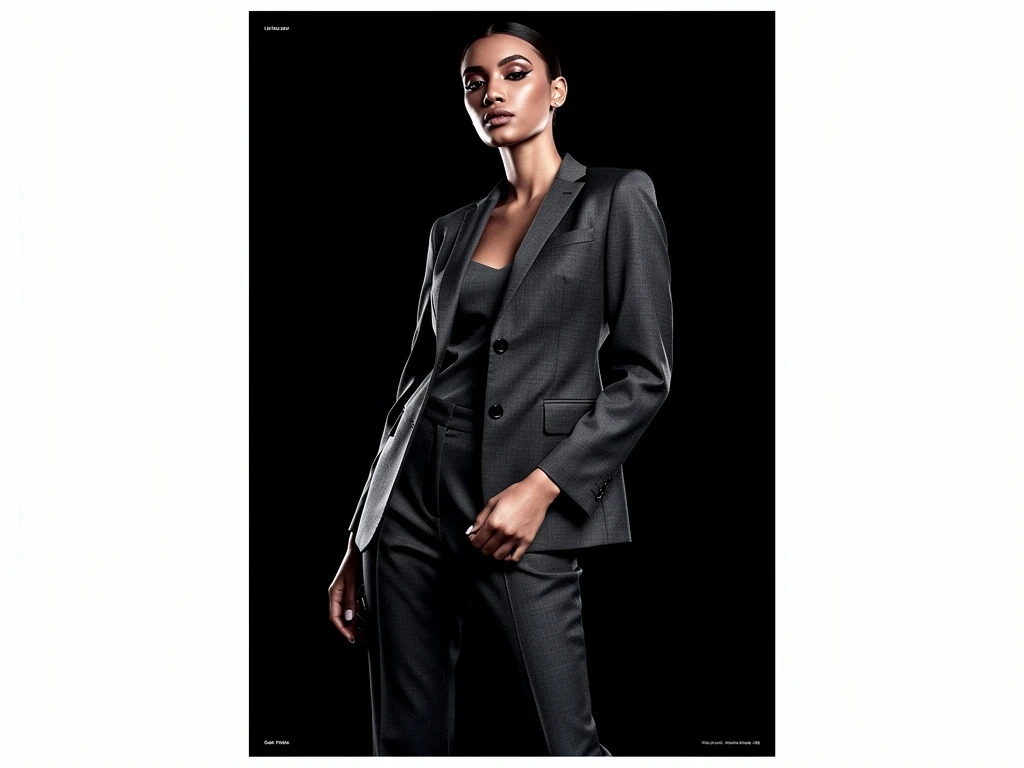
The Digital Architecture: A premium model portfolio website utilizes asymmetrical masonry layouts. A massive vertical editorial shot should sit next to two smaller horizontal beauty shots. This varied sizing creates "visual pacing." It mimics the layout of a high-end fashion magazine, keeping the casting director engaged as they scroll down the page.
3. Dedicated Sub-Galleries
A casting director looking for a commercial lifestyle model does not want to wade through high-fashion avant-garde editorial shots.
The Digital Architecture: Do not dump all your photos onto one page. Create a clear, easily navigable menu that categorizes your "looks." You should have separate galleries for "Editorial," "Commercial," "Beauty/Macro," and "Polaroids/Digitals." This proves your versatility while allowing the client to find exactly what they need instantly.
4. The Digital Comp Card (Frictionless Booking)
The ultimate goal of the website is to get hired. If a client loves your look but has to hunt for your measurements or your booking email, you have created friction.
The Digital Architecture: Every successful model portfolio website has a dedicated "About / Booking" page that acts as a digital comp card. It must clearly list your height, bust, waist, hips, shoe size, and hair/eye color in a clean, easily readable list. Directly below this data, include a seamless contact form or your agency's direct booking email.
To build a website that meets the ruthless standards of the fashion industry, you need a specialized platform. With Portfoliobox, you have access to the minimalist layouts, uncompressed high-resolution rendering, and elegant typography required to build a world-class model portfolio website — no coding required.