A stunning portfolio can still lose a client's trust in the time it takes to glance at the URL. A subdomain, an email address that ends in @gmail: these are small details, but they're the kind visitors notice without quite realising why something feels off.
Portfoliobox handles the unglamorous half of looking professional, so the gallery gets to do the talking.
Your name, not a borrowed one
A custom domain is one of the cheapest signals of permanence a creative can buy. Register something new or connect a domain you already own: .com, or a creative-specific option like .art, .studio, or .photos. Either way, the address visitors see matches the name on your business card, not a platform's.
SSL is enabled automatically on every plan, so the site displays the padlock icon without any configuration on your end.
An email that matches the domain
hello@yourname.com reads differently than the same message from a free webmail account. Professional email comes with a 5GB inbox, 10 aliases (so booking@, hello@, and info@ can all exist without separate accounts), an autoresponder for when you're unreachable, and room for up to 500 sends a day.
Read more about getting a custom email
Getting found by people who haven't found you yet
A beautiful site nobody finds is still an unfound site. SEO fields live on every page, post, and product, so search engines understand what they're looking at. A sitemap generates automatically at /sitemap.xml. Connect Google Analytics (GA4), Google Tag Manager, or a Meta Pixel if you're running ads, or use the built-in analytics for a straightforward read on traffic and devices without any setup at all.
None of this is the fun part of building a portfolio. It's the part that decides whether the fun part gets seen.
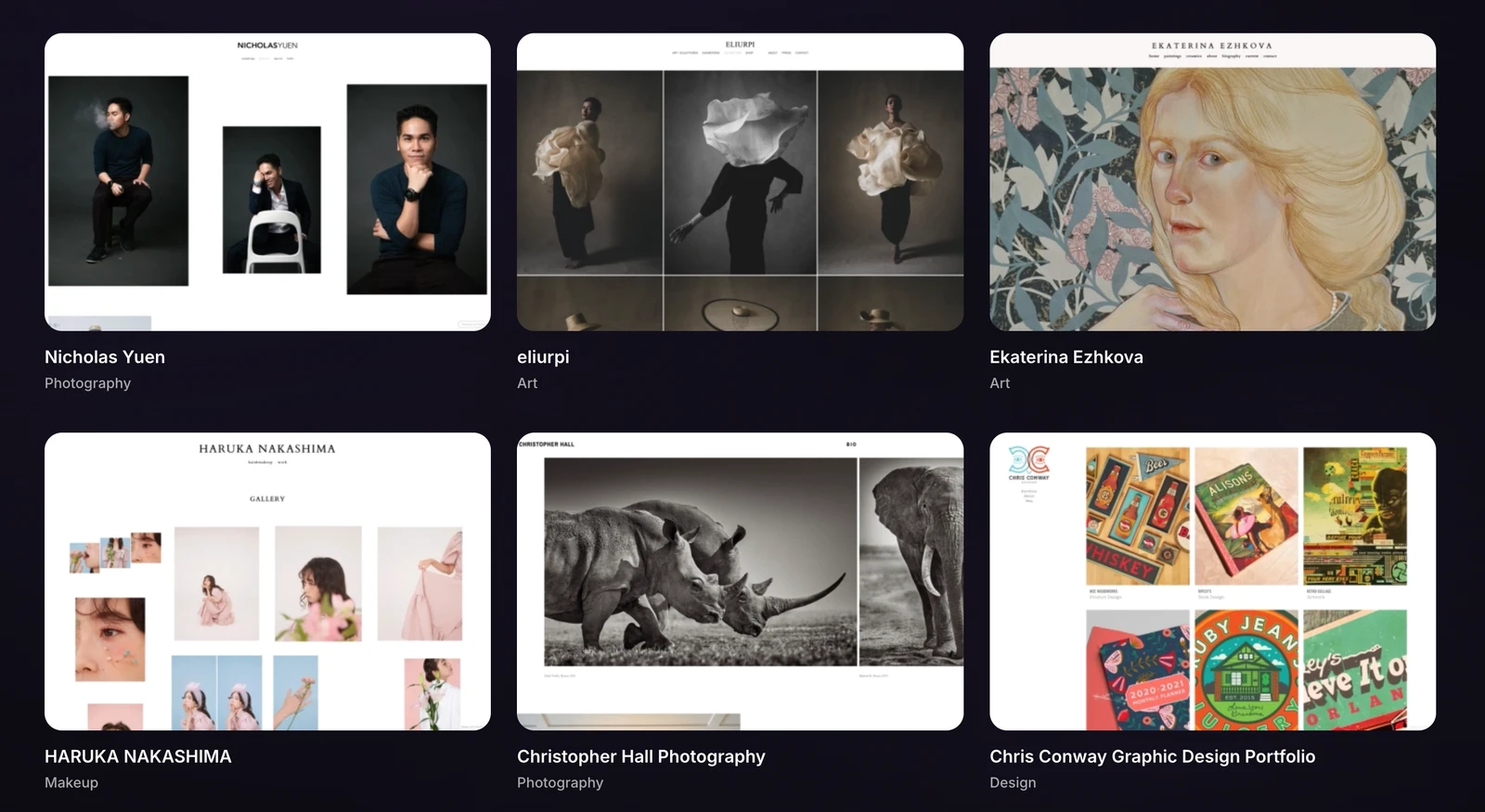
Walk through the full setup in the features overview, or browse real examples to see how other creatives have set theirs up.