Five years ago, a prominent automotive photographer realized something terrifying: despite having 200,000 followers on Instagram, his commercial booking inquiries had plummeted to near zero.
He was posting his absolute best high-octane racing imagery every single day, exactly as he always had. But the platform fundamentally changed its algorithm, pivoting aggressively toward short-form video in an attempt to combat rival networks. Overnight, his carefully orchestrated horizontal photographs were being compressed, cropped into vertical slivers, and buried under a mountain of low-effort video trends.
He had fallen into the 'Instagram Trap'. He spent years generating incredible value for a multi-billion dollar corporation, operating under the illusion that he possessed a digital portfolio. He didn't. He possessed a heavily metered profile on rented land—and the landlord had just changed the locks.
The Illusion of Social Media Ownership
The greatest lie sold to modern photographers is that a social media profile is an adequate substitute for a professional website.
When you use Instagram, TikTok, or Twitter as your primary portfolio, you relinquish absolute control over how your art is consumed. The platform decides what resolution your images are displayed at (often crushing your beautiful 4K edits into muddy, pixelated squares). The platform decides if your image will be seen by the audience you spent years building. Most destructively, the platform surrounds your fine art with chaotic advertisements, political arguments, and notifications deliberately designed to distract the viewer away from your work.
You are not hosting a gallery; you are fighting within a casino for three seconds of a stranger's attention.
Escaping the Noise with Pure Intent
When an art director or a high-end bride clicks a link in your bio and lands on your custom root domain (e.g., www.yourname.com), the psychological relationship instantly shifts.
The noise vanishes. The advertisements disappear. The notification bubbles cease. You have successfully pulled the client out of a chaotic attention-economy and placed them inside your perfectly curated, well-lit digital portfolio.
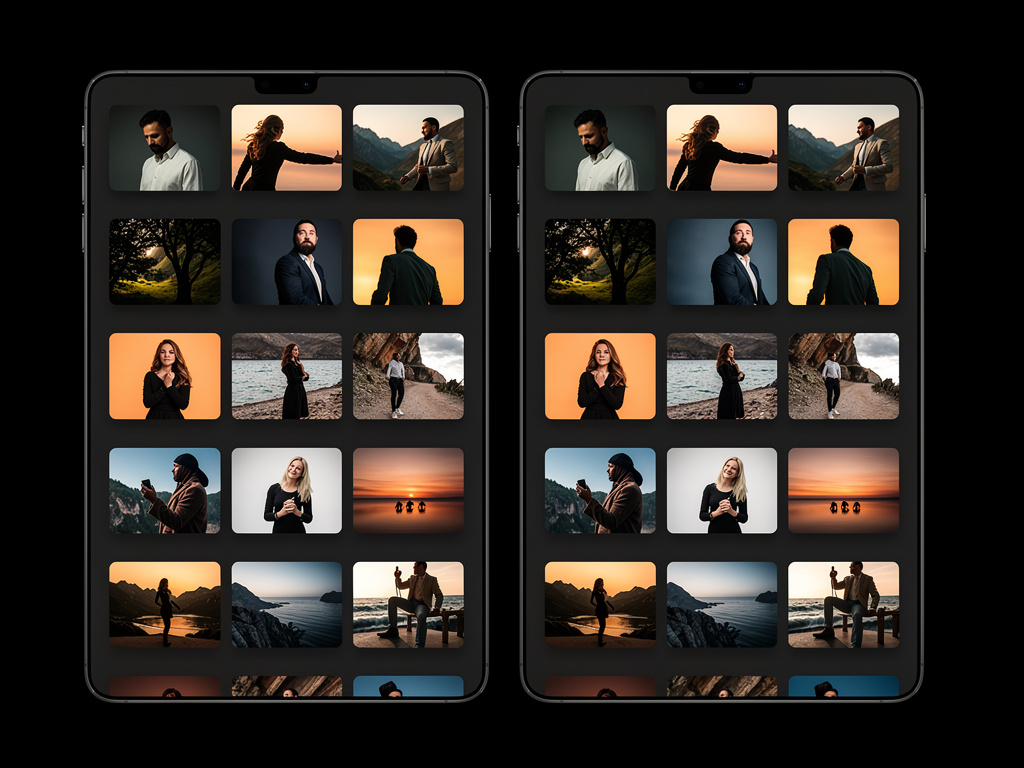
A dedicated digital portfolio allows you to present a 16:9 cinematic landscape exactly as you intended—full bleed across an iMac screen, tack-sharp, surrounded by elegant typography. You control the narrative pacing. You decide whether they see a moody black-and-white series or a vibrant commercial product campaign first.
The Search Engine Sanity
Furthermore, social media profiles are effectively walled gardens. If a creative director in Chicago Googles "Architectural Photographer Chicago," they are hunting for a localized professional website featuring contact forms, tear sheets, and transparent pricing.
Google does not natively index localized Instagram grids well. If you refuse to create a digital portfolio on your own independent domain, you are completely invisible to the largest search engine on the planet. You are effectively relying entirely on viral luck to sustain your business, rather than establishing a durable, searchable digital footprint.
The Freedom of the Custom URL
Creating a digital portfolio is the singular defining moment where an aspiring creative structurally transitions into an independent business owner.
Having your own domain means your email address reads hello@yourname.com rather than a generic Gmail address. It means you can establish private, password-protected client proofing galleries directly on your own servers without utilizing clunky third-party apps. It means that no matter how many times a social network algorithm changes, your brand remains bulletproof, consistent, and easily accessible.
Stop renting space in a crowded algorithm and secure your own professional gallery. With Portfoliobox, you can effortlessly migrate your work into unmetered, stunning independent grids in minutes — no coding required.