It might seem like a stretch to connect Project Lead The Way (PLTW) Design and Modeling—an educational framework focused on engineering, spatial reasoning, and structural design—with the world of fashion and commercial modeling. However, the core concepts taught in structural design are incredibly relevant to how a model interacts with a set, a garment, and a camera lens.
At its core, modeling is about creating shapes and understanding how light interacts with physical structures. By applying the principles of pltw design and modeling, you can elevate your portfolio from simple pretty pictures to dynamic, structurally sound editorial images. Here is how you can apply these principles.
1. Mastering Spatial Awareness on Set
In structural design, understanding spatial relationships is foundational. On a commercial set, spatial awareness is what separates a novice from a professional.
When you step onto a set, you must instantly understand your relationship to the light source, the camera lens, and the surrounding props. You are a physical structure within that space. If the lighting is hitting you from an aggressive top angle, you must understand how to tilt your chin (altering your physical structure) to catch the light rather than casting a shadow over your eyes.
2. Creating Geometric Tension in Posing
The most compelling fashion images rely on geometric tension. A photograph is a 2D medium, but you must create the illusion of 3D depth.
Think of your body as a series of intersecting lines and joints, much like a wireframe model in a CAD program. By creating triangles with your arms and legs (e.g., placing a hand on a hip, bending a knee), you introduce negative space and structural interest into the photograph. Flat, straight-on poses lack architectural depth and rarely make for a strong portfolio image.
3. Understanding Garment Architecture
High-end fashion isn't just fabric; it is wearable architecture. A strong model understands the design intent behind the garment they are wearing.
If you are wearing a structured blazer with heavy shoulder pads, you must pose in a way that highlights that architecture—perhaps by keeping your shoulders square to the camera and utilizing sharp, rigid movements. Conversely, if you are wearing a flowing, asymmetrical dress, your movements should be fluid to highlight the drape and movement of the fabric. You must model the design, not just wear it.
4. Problem-Solving During a Shoot
A key component of PLTW design and modeling is the engineering design process: identifying a problem, brainstorming solutions, testing, and refining.
A photoshoot rarely goes exactly as planned. Perhaps a pose isn't translating well on camera, or the wardrobe is bunching awkwardly. A professional model applies this iterative design process on the fly. You review the tethered monitor, identify what isn't working structurally in the image, and adjust your angles incrementally until the shot works.
5. Structuring Your Digital Portfolio
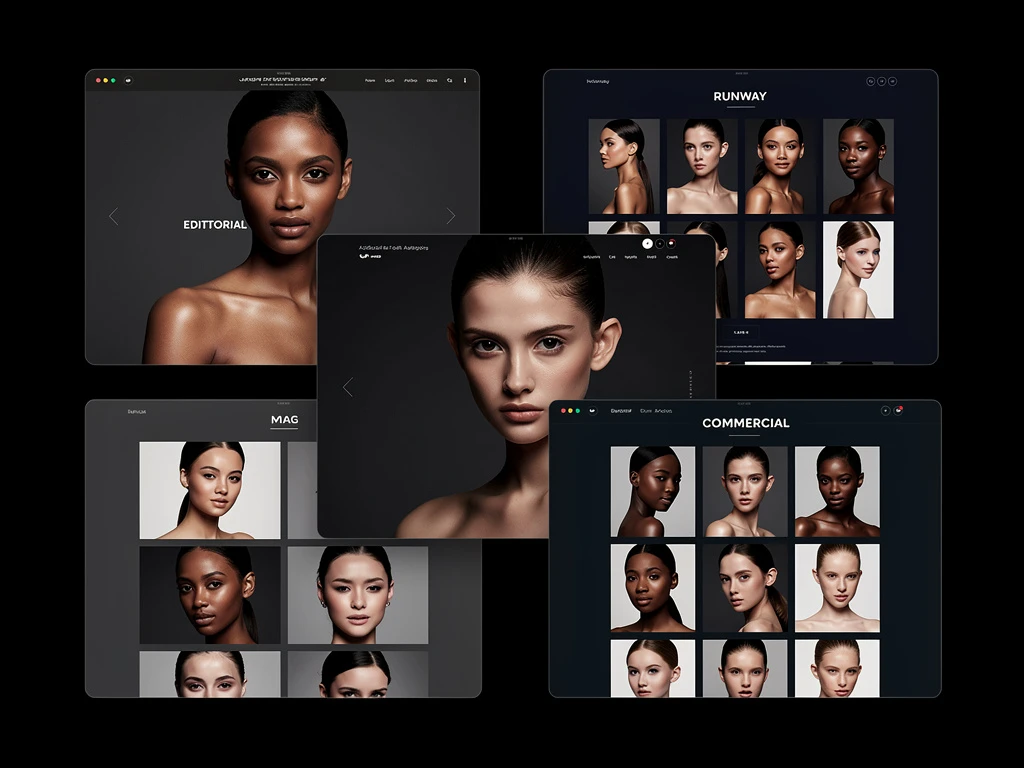
Finally, the principles of solid design apply directly to how you present your work online. Your portfolio website should be structurally sound, logically organized, and easy to navigate. A messy, chaotic website is like a poorly engineered building—it collapses under scrutiny.
Building a structurally sound portfolio doesn't have to require an engineering degree. With Portfoliobox, you can create a stunning, well-architected portfolio website in minutes — no coding required.