Many years ago, long before I was booking freelance illustration contracts with publishing houses, I was a stressed-out high school student trying to compile my AP 2D Art and Design portfolio. I spent months agonizing over which pieces to include, terrified that the College Board evaluators would reject my work.
When I finally submitted it and received a top score, I didn't realize that the rigid structure required for the AP portfolio was actually teaching me the exact framework I would need to succeed as a professional illustrator. The secrets behind a successful AP 2D Art and Design portfolio are the exact same secrets behind a portfolio that books high-end commercial clients. Here is what that process taught me about digital presentation.
Secret 1: The "Sustained Investigation" Concept
The core of the AP 2D Art portfolio is the "Sustained Investigation"—a series of pieces guided by a single, cohesive inquiry or theme.
When amateur illustrators build their websites, they usually just create a massive data dump. They include an anime fan-art sketch, a hyper-realistic charcoal portrait, and a 3D blender rendering, all on the same page. It looks chaotic and lacks identity.
The secret to a professional portfolio is cohesion. Art directors want to hire a specialist, not a generalist. Your website should feel like a Sustained Investigation. If you are targeting the children's publishing industry, every single piece in your main gallery must support that specific aesthetic and narrative style.
Secret 2: Proving the Process
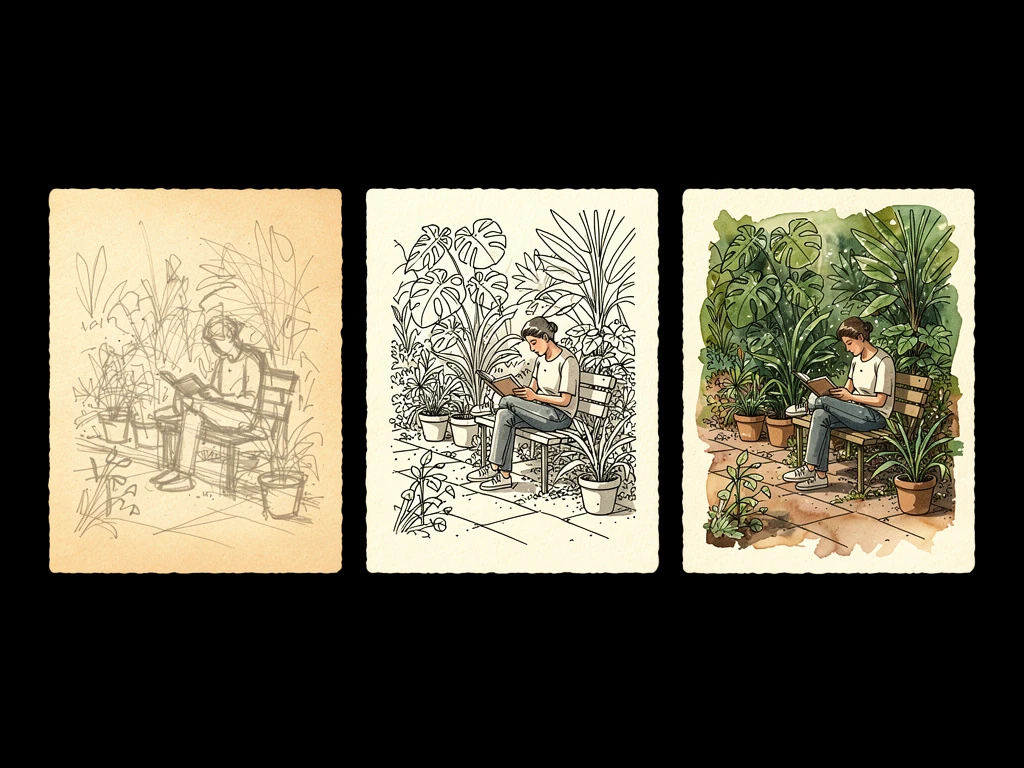
The AP board doesn't just want to see the final painting; they require you to submit visual evidence of your process—sketches, revisions, and material exploration.
This translates directly into the professional world. Commercial clients (like video game studios or advertising agencies) need to know that your beautiful art isn't an accident. They need to see that you have a reliable, repeatable pipeline. Create dedicated "Case Study" pages on your website. Show your rough thumbnails, your color scripts, and write a brief explanation of how you solved the visual problem for the client.
Secret 3: Ruthless Curation (Quality over Quantity)
The AP 2D Art portfolio strictly limits the number of pieces you can submit. You are forced to look at your body of work and cut out anything that is merely "okay."
This is the most critical lesson for a freelance illustrator. You are judged entirely by the weakest image on your website. If you include 15 breathtaking illustrations and 3 mediocre ones, a casting director will assume the 3 mediocre ones represent your true capability under pressure. Curate your website ruthlessly. A gallery of 8 flawless pieces will secure a contract vastly faster than a gallery of 40 inconsistent ones.
Secret 4: The Presentation Matters
Finally, the AP board requires you to present your work cleanly, without distracting borders or messy formatting.
Your professional website must act as an invisible frame. Do not use chaotic website templates with bright backgrounds or clunky animations. Use a minimalist, sleek design that prioritizes high-resolution image rendering, allowing the colors and textures of your illustration to speak for themselves.
The foundation of a successful career starts with a professional presentation. With Portfoliobox, you can apply these structural secrets and build a stunning, agency-grade illustration portfolio in minutes — no coding required.