The modern internet is flooded with unbelievably beautiful photography. Due to the proliferation of incredible cameras and presets, creating a visually pleasing grid of photos is no longer difficult—it is standard.
Yet, many photographers with breathtaking imagery struggle to book a single client, while seemingly "average" photographers are booked out six months in advance. The discrepancy lies in the conceptual intent behind how they make a photography portfolio.
A failing photographer builds a website exclusively to show off to other photographers. A successful photographer builds a website exclusively to solve a client's problem. Here is the conceptual guide to realigning your digital portfolio for sheer business conversion.
Empathy Over Ego: Designing for the Client
When you launch your portfolio, you must violently step outside of your own ego. An art director looking for a commercial lifestyle photographer does not care that you won a local photo club award in 2018. They care about two things: Can this person produce the specific look I need, and Will this person be a nightmare to work with?
Address these anxieties immediately. Instead of opening your homepage with a massive slider of abstract art projects to prove you are "deep," open with your most lucrative commercial work. Use your copywriting specifically to ease their logistical fears. State clearly on your 'About' page that you specialize in rapid turnarounds and seamless pre-production planning. Empathy converts better than arrogance.
The Concept of 'Proof Scent'
When a tracking dog is on a trail, it follows a continuous 'scent'. Your portfolio must provide 'proof scent'—a continuous, unbroken path of evidence proving you can do the job.
If an ad agency is looking to hire you for a massive automotive campaign, they shouldn't have to sift through three folders of weddings and dog portraits to find your car photography. The 'scent' is broken by distraction.
To create strong proof scent, ruthlessly isolate your specializations. If you truly shoot both commercial cars and weddings, build two completely distinct galleries (or even entirely separate domains). When a client clicks the 'Commercial Automotive' tab, they should fall into a deep, highly structured silo containing nothing but perfectly lit vehicles, BTS tear sheets of massive lighting rigs, and case studies of past car campaigns. The deeper they click, the stronger the scent becomes.
Eliminating The Paradox of Choice
A paralyzed client does not pull out their credit card.
Many photographers ruin their conversion rates by offering the viewer fifty different things to click on. If your homepage has links to your blog, your Instagram, your Twitter, your old Flickr account, your print store, and seven different minor galleries, the user becomes overwhelmed and bounces.
In digital marketing, this is known as the Paradox of Choice. You must dictate the funnel. A high-converting photography website usually has no more than four items in the primary navigation: Work, Process, About, Contact. Strip away the clutter. Every single click on your website should funnel the user directly toward the final goal: the inquiry form.
Social Proof as Visual Anchors
Clients are naturally risk-averse. They do not want to be the first person to hire you for a big job.
To drastically increase conversions, you must integrate social proof directly into the visual flow. Instead of hiding client testimonials on a separate, boring sub-page, weave them organically into your image grids. If examining a gallery of corporate headshots, intersperse an elegant quote block from a CEO praising your fast, painless lighting setups. Tying the visual proof directly to third-party verbal praise creates an ironclad conversion metric.
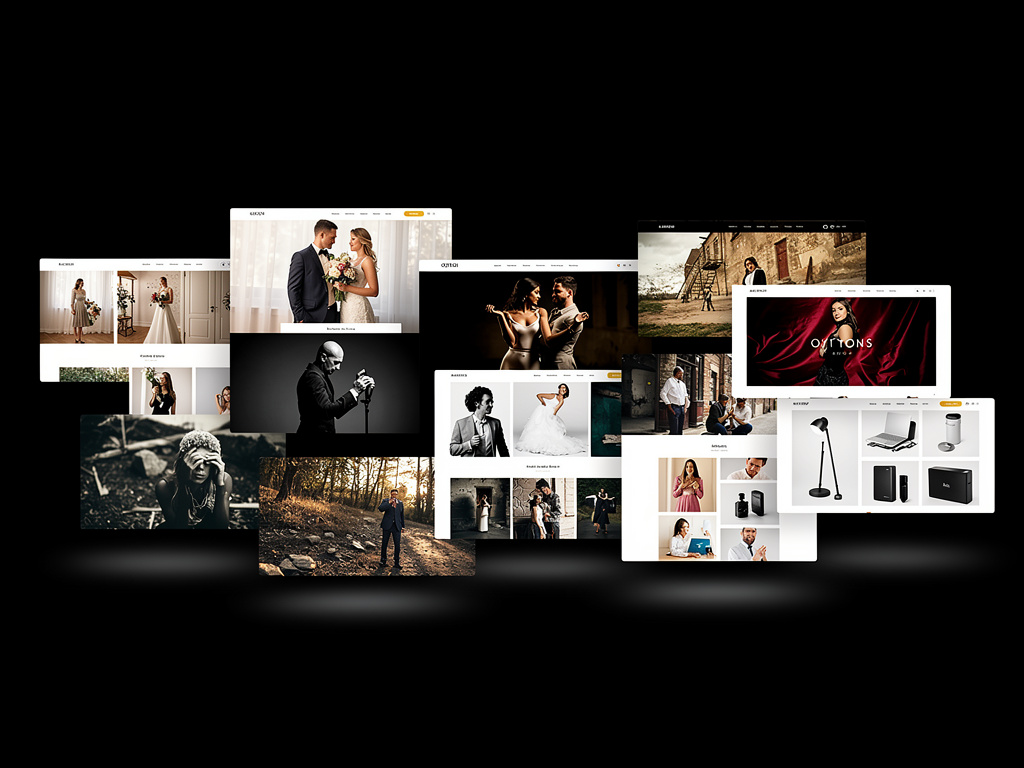
Stop losing jobs because your website is too complicated to navigate. By utilizing Portfoliobox, you can leverage natively minimal templates that eliminate distractions and funnel your clients elegantly toward the booking page — no coding required.