In the creative industry, a Webflow portfolio is often considered the gold standard of web design. They are famous for their flawless micro-animations, ultra-customized layouts, and high-end editorial aesthetics. When a makeup artist (MUA) sees one, they immediately want that level of digital prestige for their own brand.
However, there is a massive catch: Webflow is incredibly complex. It is essentially visual coding. If you do not understand HTML structure, CSS classes, and breakpoint management, building a Webflow portfolio will take you months, or cost you thousands of dollars to hire a developer.
Fortunately, you do not need to learn web development to achieve that premium look. The secret to a successful Webflow portfolio is not the code; it is the design principles behind it. Here are the secrets you can steal to build an agency-grade makeup portfolio without touching a line of code.
Secret 1: Intentional Micro-Interactions
One of the hallmarks of a high-end Webflow portfolio is how it reacts to the user. It isn't static.
The Principle: When a client hovers over an image in your gallery, the image should respond. It might slowly zoom in, or a subtle color overlay might appear with the name of the editorial campaign. The Solution: You don't need custom CSS to achieve this. Modern portfolio builders designed for creatives (like Portfoliobox) have these elegant hover states and micro-animations built directly into their gallery blocks. You simply toggle them on. It adds instant, tactile luxury to your presentation.
Secret 2: Asymmetrical Editorial Architecture
Amateur websites rely on perfectly uniform, square grids. A premium Webflow portfolio breaks the grid, utilizing asymmetrical, magazine-style layouts that mix vertical and horizontal images seamlessly.
The Principle: Visual pacing. By breaking the grid, you force the client's eye to wander dynamically across your makeup artistry, keeping them engaged longer. The Solution: Instead of fighting rigid templates, choose a builder that offers dynamic masonry grids. This allows your macro beauty shots (often vertical) to sit perfectly alongside your wide, cinematic SFX or commercial tear sheets (often horizontal) without requiring complex code to align them properly.
Secret 3: Uncompressed High-Resolution Rendering
A massive secret behind top-tier developer portfolios is that they optimize their servers to load massive, uncompressed images instantly.
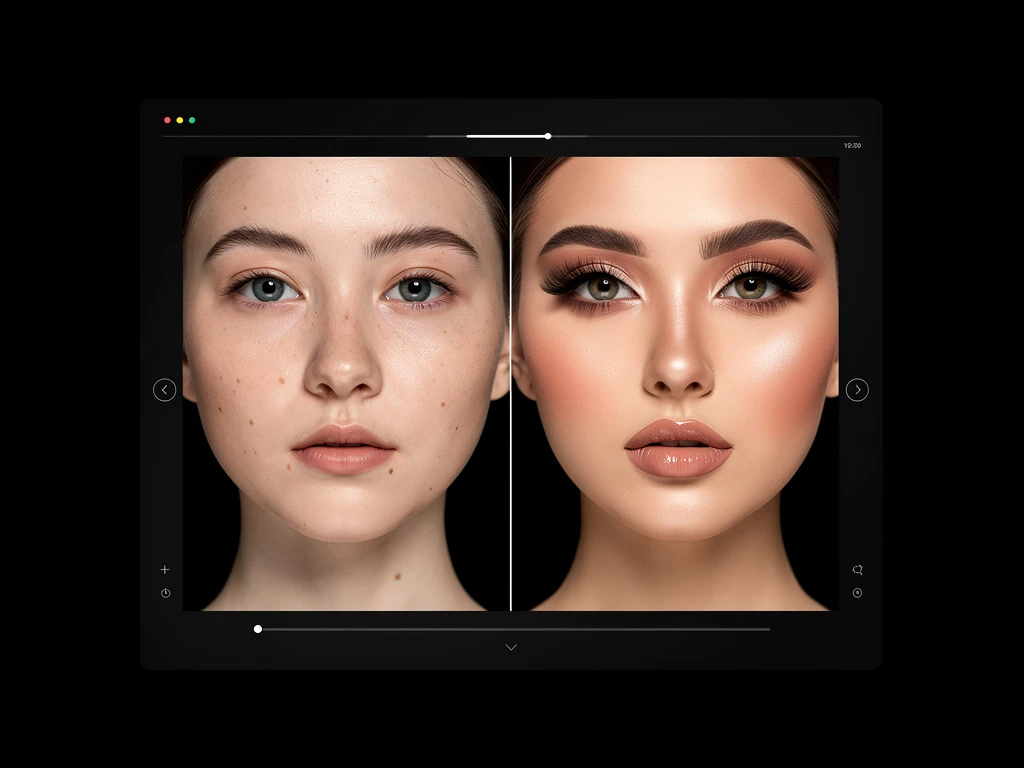
The Principle: If a client zooms in on your bridal makeup work, they must see the flawless skin texture and blending, not a pixelated mess caused by heavy server compression. The Solution: Do not use generic website builders that aggressively compress images to save space. Use a visual-first platform that is architected specifically to handle large, high-resolution files.
Secret 4: The Immersive Video Header
The most striking Webflow portfolios almost always open with a massive, edge-to-edge video or cinemagraph that immerses the viewer instantly.
The Principle: Motion proves capability. A video header showing a model turning her head proves that your makeup application is flawless from every angle and under harsh lighting. The Solution: Use a builder that allows you to easily drop an auto-playing, silent video directly into the "hero" section of your homepage, creating an instant high-end impact without worrying about background video coding tags.
You can achieve the prestige of a custom-coded website without the technical headache. With Portfoliobox, you can utilize these premium design secrets and build an agency-grade makeup portfolio in minutes — no coding required.