ImageNation Barcelona 2026 | Selected Photographer
The photographer & the work
Romain Thiery has built a distinctive artistic practice around urban exploration photography, work that approaches abandoned spaces not as ruins to exploit, but as archives of human presence. His selected image for ImageNation Barcelona is a masterclass in restraint and reverence.
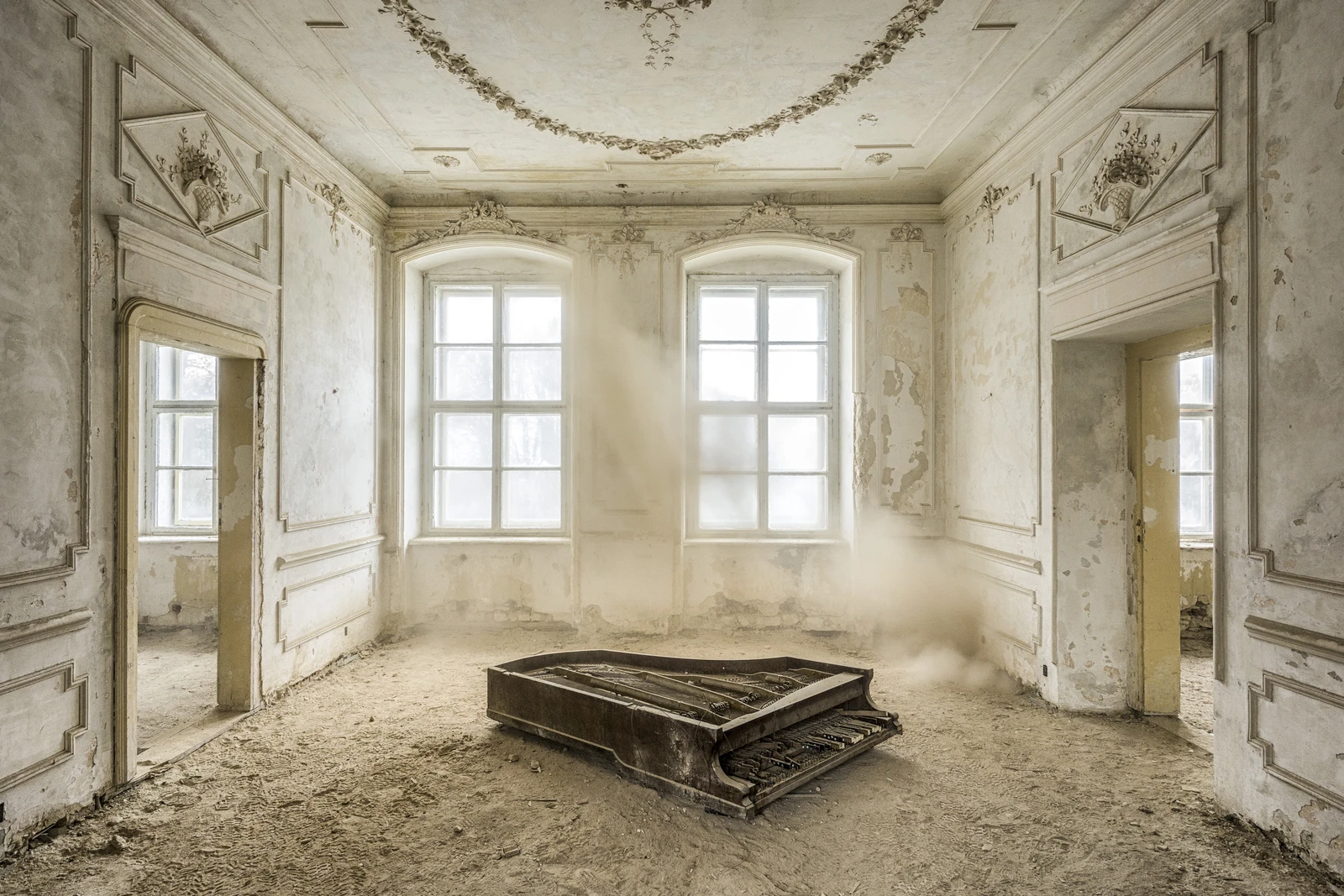
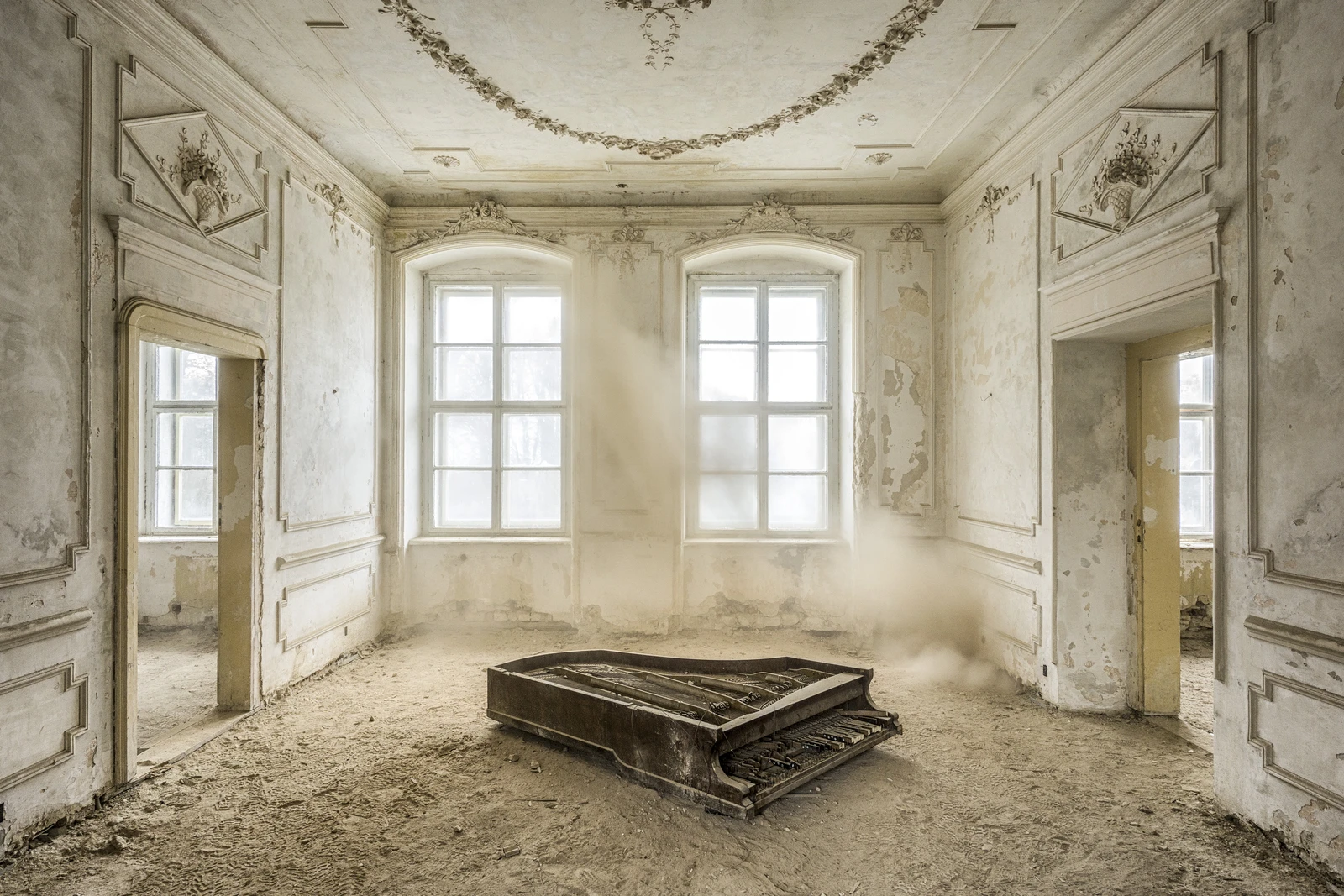
The photograph presents a grand piano collapsed onto the floor of a 13th-century Polish palace, a building that has served as a noble residence, a wartime archive, and a sanatorium before falling into abandonment. Plaster dust hangs suspended in soft, natural light filtering through arched windows, disturbed deliberately by Thiery to bring a sense of movement, an almost living presence within this frozen space. Rococo ceiling mouldings remain intact overhead, their delicate details still visible despite decades of neglect. The composition is rigorously symmetrical, inviting the viewer into a moment of geological time, where music once lived, now only silence and dust remain. The piano itself has since disappeared, making this photograph its final witness.
What distinguishes Thiery's work is his refusal to sensationalise decay. There is no melodrama here, no horror-story framing. Part of his long-term series Requiem pour pianos, the image functions as a visual elegy, one entry in a decade-long global search for forgotten instruments, all photographed without staging or alteration. The piano becomes a protagonist in a narrative about cultural memory and architectural witness. Every detail, the angle of the fall, the texture of peeling plaster, the geometry of the room, speaks to loss with a quiet dignity. The soft, natural light is crucial; it allows us to see not destruction, but transformation.
Thiery's work exists at the intersection of fine art and documentary, exploring spaces where human creativity once flourished. A pianist since the age of five, he brings a musician's sensitivity to these encounters, a recognition that buildings, like instruments, are meant to resonate with life. When they fall silent, something essential is lost.
Interview with Romain Thiery
How would you describe your photography in one sentence to someone who's never seen your work?
I am a French fine art photographer. For over ten years, I have been travelling the world in search of forgotten pianos, which I photograph and record entirely without staging. This long-term series, titled Requiem pour pianos, documents the silent beauty of these abandoned instruments and the spaces that shelter them.
When did you first pick up a camera, and what made you keep going?
I grew up with photography, but it was during a long trip across Asia in 2008 that I realised it was the medium I truly wanted to work with. Self-taught, I developed my practice through my series Requiem pour pianos, which became the guiding thread of my entire artistic work.
What draws you to photographing abandoned spaces and pianos? Was there a specific moment or image that pulled you in that direction?
I started playing piano at the age of 5, and the instrument quickly became an integral part of my life. I always wanted to build an artistic project around it. It was the discovery, over ten years ago, of a first abandoned piano that gave me the idea of bringing my two passions together into a single project.
Tell us the story behind the image we selected for the exhibition. Where were you, and what was happening?
This palace in the Polish countryside was built in the 13th century and transformed into a residence. It passed through many hands, and at the end of the 19th century, a wealthy American bought it as a wedding gift for his daughter, investing to restore its former glory. During the Second World War, it served as an archive centre, then was later converted into a sanatorium. Abandoned for years and repeatedly looted, only one object remained inside: this piano. In 2021, it too disappeared.
What were the conditions like when you took this shot? How long had you been working on it — or was it unexpected?
For me, it is essential to take the time to observe and contemplate before pressing the shutter. You have to immerse yourself in the space, feel its atmosphere, understand its light. Only then do I take the photograph. I never move or alter anything. But this time, I wanted to bring movement into the image. I had the idea of disturbing the dust around me to create a sense of dynamism, an almost living presence within this frozen space.
Is there something about exhibiting in Barcelona specifically that excites you?
Barcelona is a city with a demanding relationship to image and art. Being selected there, as part of a collaboration with Portfoliobox, gives me the feeling that my work continues to travel and find new eyes.
Have you exhibited your work in a physical space before? If so, how does it compare to seeing it online?
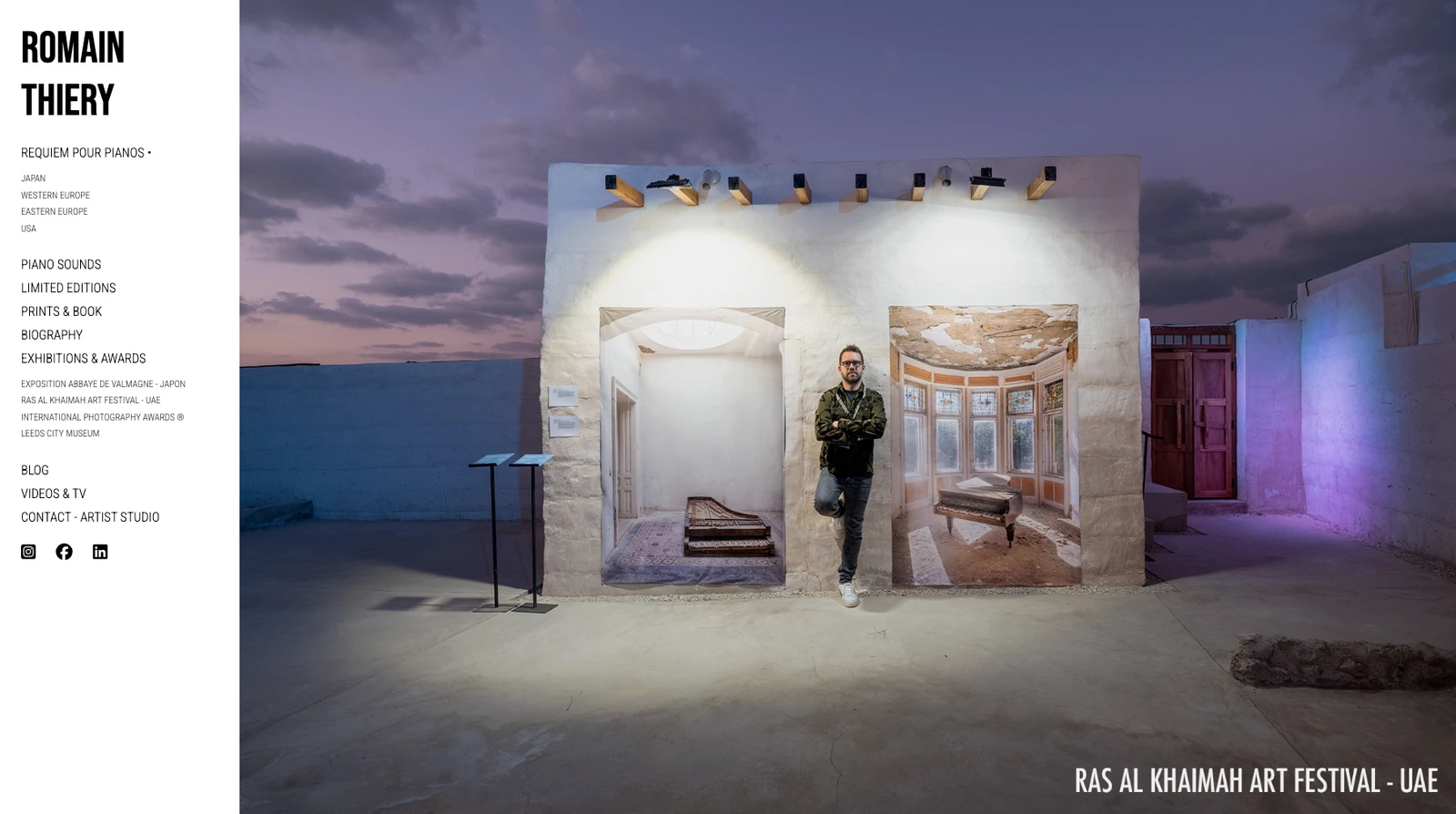
Yes, for over eight years, Requiem pour pianos has been shown in art galleries, institutions, museums and contemporary art biennials around the world, including in the United States, the UAE, Japan, South Korea, and across Europe. Last year, I also received the Photographer of the Year award at the International Photography Awards.
How long have you been using Portfoliobox, and what made you choose it for your portfolio?
I have been using Portfoliobox for several years now. What convinced me was the simplicity of the interface. It doesn't compete with the images, it serves them. The experience is fluid and coherent, and the customer support is remarkably responsive and professional. For work as visually charged as mine, that was essential.
Exhibition Details
ImageNation Barcelona 2026
May 29–31, 2026
Barcelona, Spain
Discover more of Romain Thiery's work at www.romainthiery.fr