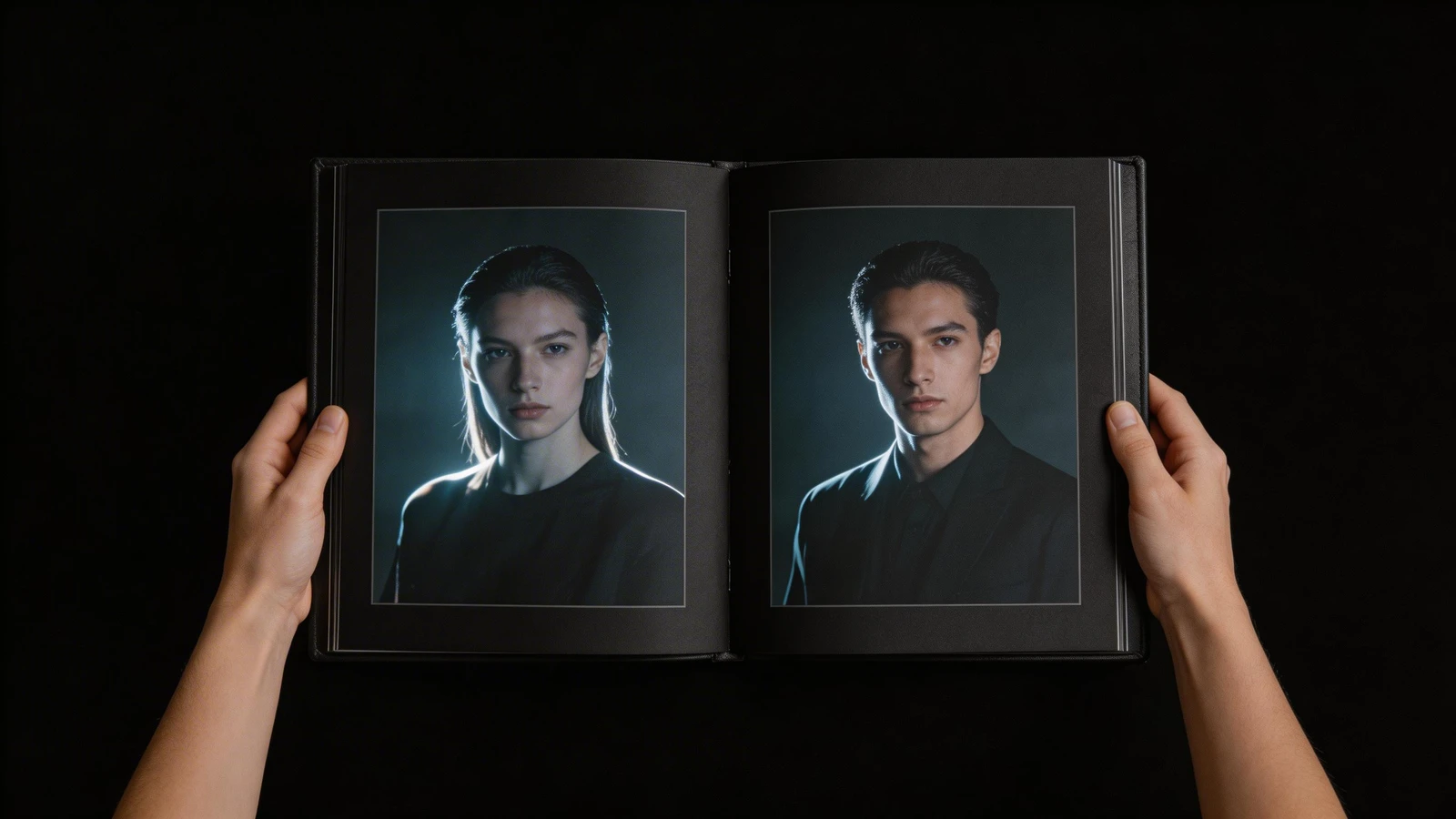
In the modeling industry, you are only as good as your book. You can have the most striking bone structure in the world, but if your portfolio is disorganized, outdated, or filled with amateur photography, casting directors will pass you over. Your portfolio is your resume, your business card, and your visual pitch all rolled into one.
Mastering a professional portfolio for modeling goes far beyond just uploading pretty pictures to the internet. It requires strategic curation, an understanding of industry standards, and a flawless digital presentation. Here is a deep dive into building a book that secures high-end campaigns.
The Foundation: Unretouched Digitals
Before a client looks at your heavily styled tear sheets, they need to see the raw materials they are working with. Every professional portfolio must feature a prominent section for digitals (polaroids).
These should be high-resolution images taken in natural daylight against a blank wall. You must wear form-fitting, neutral clothing (like a black tank top and dark jeans), with zero makeup and natural hair. Include a straight-on headshot, profiles of both sides, and a full-body shot. Crucially, these images must be updated every 3 to 6 months to reflect your current look.
The Architecture of the Book
A disorganized portfolio is an immediate red flag for casting directors. They are time-poor and need to assess your range within seconds. You must categorize your work logically.
Divide your website into distinct galleries based on your capabilities. Standard categories include:
- Commercial/Lifestyle: Warm, approachable images showing movement and relatable expressions.
- Editorial/High Fashion: Edgy, angular poses with strong lighting and high-end styling.
- Beauty/Macro: Close-up shots focusing on skin texture, lips, and eyes (crucial for cosmetic campaigns).
- Digitals: Your current, raw polaroids.
Quality Over Quantity: The Curation Process
The biggest mistake new models make is padding their book. They include every photo from every test shoot, resulting in a watered-down portfolio.
You are judged by your weakest image. If you have five stunning editorial shots and fifteen poorly lit, amateur photos, the client will remember the amateur photos. Ruthlessly curate your portfolio. It is far better to have a small, incredibly strong book of 10 to 15 flawless images than a sprawling gallery of mediocre work.
The Digital Comp Card
Your portfolio website must include a downloadable comp card (zed card). This is a one-page PDF featuring your strongest headshot, 3-4 diverse supporting images, and your vital stats.
Producers often download these to create digital casting boards for their clients. If your comp card is missing or if your stats (height, bust/waist/hips, shoe size) are not clearly legible, you create friction in the casting process, which often leads to losing the job.
A Flawless User Experience
Finally, the vessel holding your images must be as professional as the images themselves. A clunky, slow-loading website with distracting animations or a messy URL signals that you are not a serious professional. Your portfolio website should be fast, minimalist, and fully optimized for mobile devices (as many casting directors review talent on their phones).
Building a flawless digital presentation is the most important investment you can make in your career. With Portfoliobox, you can create a stunning, agency-grade portfolio website in minutes — no coding required.