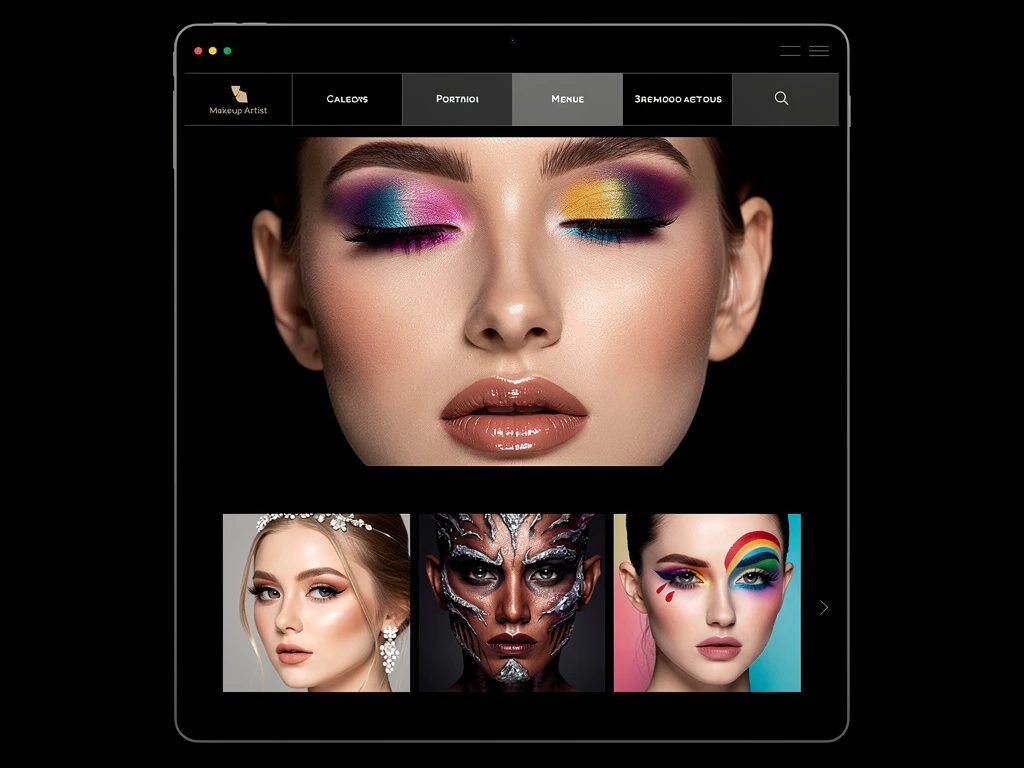
Many makeup artists (MUAs) spend weeks building a beautiful website, launch it with a celebratory Instagram post, and then... nothing happens. The phone doesn't ring. The inbox remains empty. They have a gorgeous online portfolio website, but it acts like a digital ghost town.
The frustration is understandable, but the diagnosis is usually simple. A beautiful website is not inherently a successful website. The secret behind a portfolio that actually generates high-paying bookings is not just the quality of the photos; it is the user experience (UX) and strategic friction reduction.
Here is how you can transform your digital presence from a passive gallery into an active client-generating machine.
The Problem: The Passive Gallery
Most MUAs treat their website like a museum. They hang their best work on the digital walls and expect clients to simply wander in, appreciate the art, and somehow figure out how to buy it.
When a bride or a commercial director visits your site, they are usually in the middle of a stressful planning process. They do not want to hunt for information. If they have to search for your location, guess what services you offer, or figure out how to contact you, they will leave and hire someone whose website did the work for them.
The Secret: Frictionless Navigation
The core secret to a successful online portfolio website is removing all friction between the client viewing your work and the client hiring you.
1. The Immediate Value Proposition
When a visitor lands on your homepage, they should immediately know what you do and where you are located. "Sarah Smith | Luxury Bridal Makeup | Based in New York City." Do not make them guess your specialty or assume you are willing to travel. Clarity converts.
2. Strategic Call-to-Action (CTA) Placement
Never leave a client at a dead end. When a bride finishes scrolling through your breathtaking bridal gallery, what happens next? If the page simply ends, she will likely close the tab.
Every single gallery page should end with a clear, highly visible Call-to-Action (CTA). Buttons like "Inquire About Your Wedding Date" or "Request Commercial Rates" should guide the user directly to your contact form. You must tell them exactly what the next step is.
3. Transparent (But Strategic) Pricing
Many MUAs hide their pricing out of fear of scaring away clients. This usually results in dozens of emails from people who do not have the budget for your services, wasting everyone's time.
You do not have to list every single price point, but including a "Services starting at $X" section acts as a vital filter. It immediately qualifies the client. If they fill out your contact form after seeing that starting price, you know they are a serious, qualified lead.
The Professional Infrastructure
Finally, the backend of your website must be flawless. If a client tries to fill out your contact form and the site crashes, or if the submit button is broken on mobile devices, you lose the booking instantly.
Your online portfolio website must be hosted on a reliable platform that guarantees fast load times (even with high-resolution images) and perfect mobile responsiveness.
Building a website that actively converts clients doesn't have to be technically exhausting. With Portfoliobox, you can create a stunning, strategically optimized portfolio that guides clients effortlessly toward booking your services — no coding required.