In the professional fine art world, an exhibition does not simply "happen." A physical solo show at a legitimate gallery requires months of logistics. The artist and the gallery director must secure massive financial funding, determine exactly which paintings will fit on which physical walls, calculate shipping costs, and send private previews to wealthy art collectors before the doors ever open to the public.
Historically, artists managed this logistical nightmare by sending chaotic email chains filled with dozens of massive PDF attachments and blurry reference photos.
This process is slow, frustrating, and incredibly unprofessional. Elite contemporary artists no longer use PDFs to pitch exhibitions. Instead, they build bespoke, password-protected Presentation Websites specifically engineered to act as a digital blueprint for the physical show. Here is exactly how to deploy a B2B presentation site to dominate the exhibition curation process.
1. Creating the 'Private Viewing Room'
When an artist prepares for a major exhibition, secrecy is paramount. If you upload all twenty of your brand-new, unreleased oil paintings to your public Instagram feed six months before the gallery opening, you completely destroy the exclusivity of the physical show. Wealthy collectors will not travel to buy art they have already seen online for free.
The Digital Formatting Solution: You must construct a hidden "Sub-Gallery" within your existing web portfolio. This dedicated page should be completely removed from your public navigation menu. More critically, it must be locked behind an aggressive Password-Protected Wall.
When pitching the physical exhibition to a gallery director in London, you do not send an email with attachments. You send a highly secure link (e.g., www.yourname.com/chelsea-exhibition) and a uniquely generated password.
This single action elevates your corporate B2B authority infinitely. You just proved to the Gallery Director that you understand high-end luxury sales tactics and intellectual property (IP) protection.
2. Formatting the 'Architectural Mock-Up'
A Gallery Director's primary logistical fear is scale. If you tell them you have 15 paintings ready, they panic because they don't know if your 15 paintings will physically fit onto their 30-foot gallery wall.
A high-converting Presentation Website solves this problem geometrically.
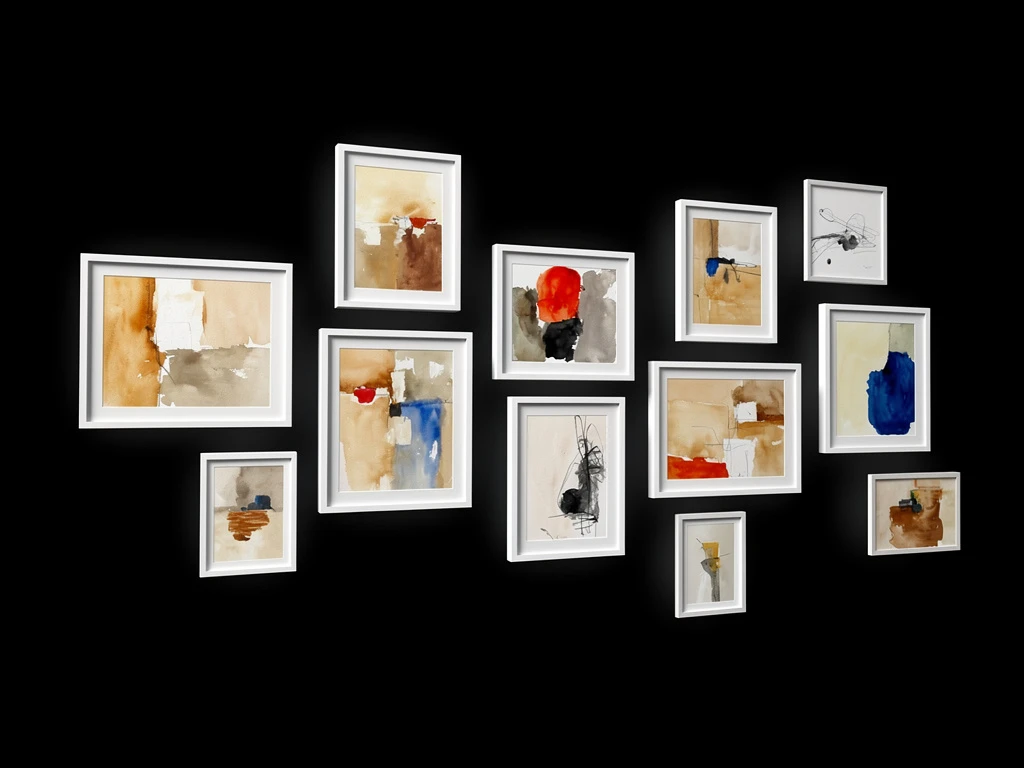
The Digital Wall Layout: Do not simply upload the 15 flat JPEG paintings into a standard grid. Take a high-resolution photograph of a massive, blank white wall (you can take a photo of the actual gallery you are pitching, or simply a pristine studio wall).
Using Photoshop, digitally "hang" your 15 pieces of artwork directly onto the photograph of the wall in their exact, mathematically accurate scale relative to one another. Upload this massive "Architectural Mockup" as the Hero Banner of your Presentation Site. The Gallery Director instantly sees the physical reality of the exhibition without having to do any mathematical guesswork.
3. Integrating the 'Collector Inquiry' Funnel
The ultimate goal of a Presentation Website is pre-sales. A successful gallery opening occurs when half the artwork is already sold before the actual party begins.
You must arm the Gallery Director with a digital tool they can forward to their most affluent VIP art collectors. Beneath every single unreleased artwork on your Private Presentation Site, include the specific Title, Medium, Scale, and the pre-show Price.
Crucially, integrate a stark, native web-form directly under the grid labeled "VIP Inquiries." If a wealthy collector clicks the password-protected link, falls in love with the painting, and fills out the form, that data must instantly route to the Gallery Director, allowing them to close the B2B transaction weeks in advance.
Selling $10,000 physical canvases requires utilizing multi-million-dollar B2B web infrastructure. By deploying your physical exhibition pitches on Portfoliobox, fine artists seamlessly spin up encrypted private viewing rooms, lossless B2B mock-up grids, and integrated VIP contact funnels designed explicitly to assist gallery directors in closing massive physical art deals — no coding required.