Matthew was a prolific digital artist. He had spent eight consecutive years drawing every single day, and he wanted his online portfolio to prove his incredible dedication. He meticulously uploaded 400 different pieces of illustration to his website, ranging from extremely raw, messy 10-minute sketchbook doodles to fully-rendered, breathtaking sci-fi landscapes that took him sixty hours to paint.
He applied for a Senior Concept Art role at a massively prestigious gaming studio that paid $120,000 a year. The studio rejected him.
A year later, at a convention, Matthew met the Art Director who had rejected him and asked why he didn't get the job. The Director was honest: "Your heavy landscape paintings are mathematical masterpieces. But directly underneath them, you posted forty terrible, anatomically incorrect sketches of anime characters. The bad art dragged the good art down. I assumed the landscapes were just lucky accidents. You proved you lack quality control."
This is the most painful lesson an artist will ever learn: Your digital portfolio is only exactly as strong as the single worst piece of art you upload to it.
To command top-tier rates, you must ruthlessly curate your online persona. You must stop trying to prove your dedication, and start proving your consistency. Here is exactly what you must delete.
The Execution of the "Rule of 10"
The greatest B2B digital asset you possess is brevity. A commercial Art Director has roughly fifteen seconds to evaluate your entire career before they click away.
If they see a grid of 200 images, they will unconsciously speed-scroll vertically, entirely ignoring your meticulous brushstrokes and lighting.
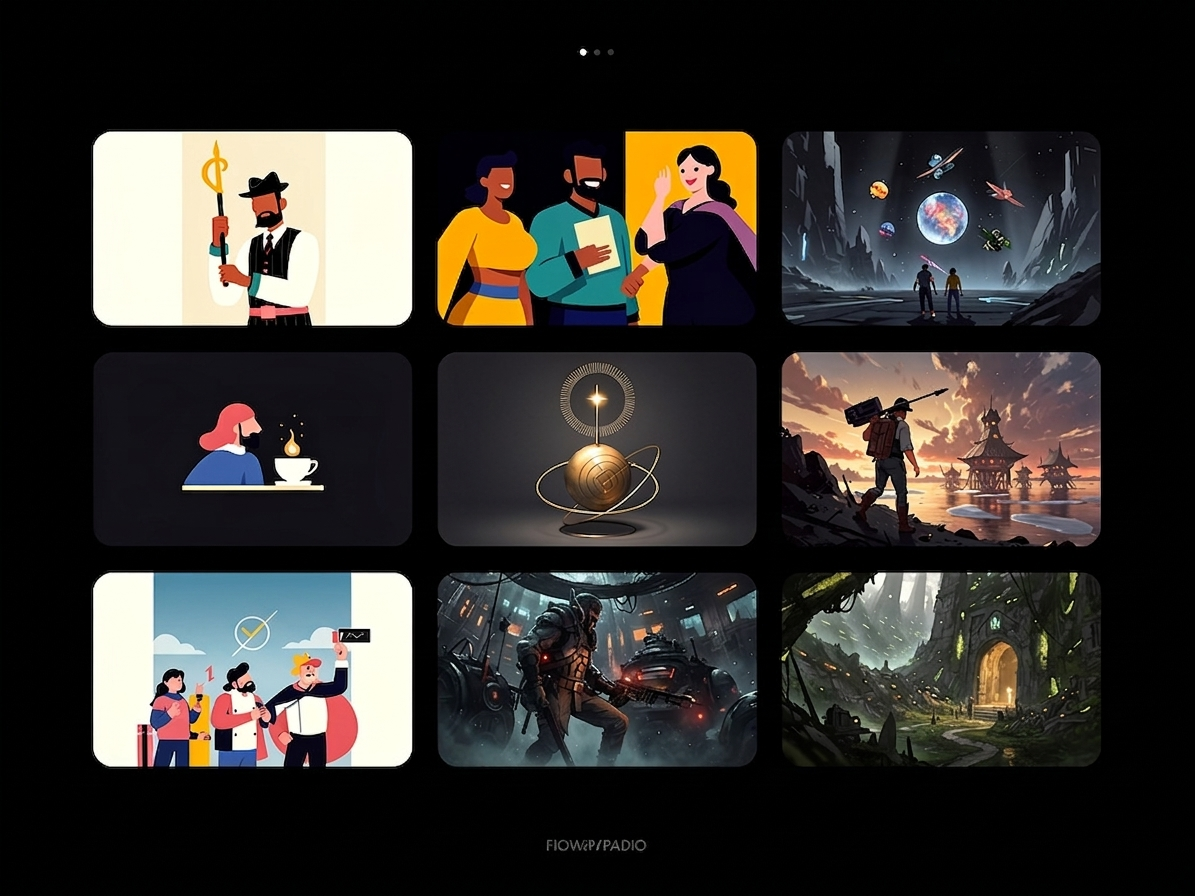
The Curation Fix: You must violently delete 90% of your website. Execute the 'Rule of 10'. Your primary digital portfolio should hold exactly ten, hyper-perfect, completely finished masterpieces. Nothing else. By presenting a tiny, flawless gallery surrounded by vast amounts of negative space, you force the Art Director to stop and stare at individual pieces. Presenting less work artificially drives up your perceived value, making your art feel rare and highly curated, exactly like a high-end physical museum.
Deleting the 'Nostalgia Trap'
Artists are incredibly emotionally attached to their own growth. An artist will frequently keep a terrible, poorly lit painting from 2018 on their professional portfolio simply because they remember how proud they were when they painted it in high school.
A B2B hiring manager does not care about your emotional journey. They do not care where you were five years ago. They only care about what you can paint for them today at 3:00 PM.
The Curation Fix: A professional portfolio website is a living, breathing commercial document. It is not an archive. You must institute an aggressive "Rolling Deletion" policy. Every time you finish a brand new, magnificent illustration and upload it to your website grid, you must locate the weakest prevailing image on your website and permanently delete it. Upgrading the ceiling requires aggressively raising the floor.
Hiding the 'Process' Chaos
A dangerous modern trend in illustration is the "Process Dump." Because social media algorithms reward "behind the scenes" videos heavily, illustrators assume Art Directors want to see massive folders of messy, chaotic sketchbook pages and rough digital layers on their portfolios.
While Art Directors appreciate process, they despise visual clutter.
If your website homepage looks like a messy desk covered in eraser shavings and scrap paper, you project B2B instability. The Curation Fix: You must never put raw process sketches on your main portfolio grid. If you are going to show the skeletal under-drawing of an illustration, it must live exclusively inside a dedicated, chronological "Case Study" sub-page directly underneath the polished final asset. Quarantine the chaos.
Securing elite agency commissions demands absolute editorial ruthlessness. By building your illustration empire on Portfoliobox, artists effortlessly deploy uncompressed masonry grids and secure sub-pages to execute flawless, high-contrast B2B curation — no coding required. Explore portfolio templates specifically designed for illustrators to get started today.