For a visual artist, the decision of which website builder to utilize is arguably the most important business decision of their entire digital career.
Because the internet is flooded with aggressive commercial advertising, most artists naturally migrate toward massive, heavily publicized website platforms (like Wix, Shopify, or generic WordPress). The problem is that these corporate platforms were explicitly built to power massive e-commerce businesses, not visual art galleries.
When a traditional painter or sculptor attempts to force their massive, highly-textured digital imagery into a web template built mathematically to sell branded t-shirts and consulting courses, the friction destroys the art. The website feels clunky, the images load slowly, and the "Gallery" layouts feel cheap. To sell high-end art, you must utilize an architectural platform explicitly engineered for visual media. Here is exactly how to choose the right portfolio builder.
1. The 'Lossless Media' Requirement
The most brutal enemy a visual artist faces on the internet is algorithmic image compression.
Giant retail website builders host millions of massive online stores. To prevent their servers from collapsing, they automatically deploy scripts that aggressively compress every single JPEG uploaded by their users. If you upload a massive, 40-megabyte flatbed scan of an oil painting—hoping to show a collector the microscopic details of your brushstrokes—the retail server silently crushes it.
What Artists Must Demand: You must choose a portfolio builder that guarantees access to an "Unmetered Content Delivery Network (CDN)." The platform must explicitly state that they refuse to execute lossy compression on your artwork. Your 4K imagery must render exactly as sharply on the collector's screen as it does on your studio monitor.
2. Navigating the 'Aspect Ratio' Chaos
In retail e-commerce, product photography is uniform. A t-shirt is always photographed in a perfect, identical vertical rectangle. Retail website builders rely heavily on this uniformity, locking images into identical, unmoving UI boxes.
A fine artist's portfolio is geometric chaos. You might be displaying a tall bronze sculpture directly next to a massive, incredibly wide panoramic landscape painting.
What Artists Must Demand: If you upload erratic art dimensions to a retail template, the builder will frequently chop the edges of your painting off to make it fit into their square box.
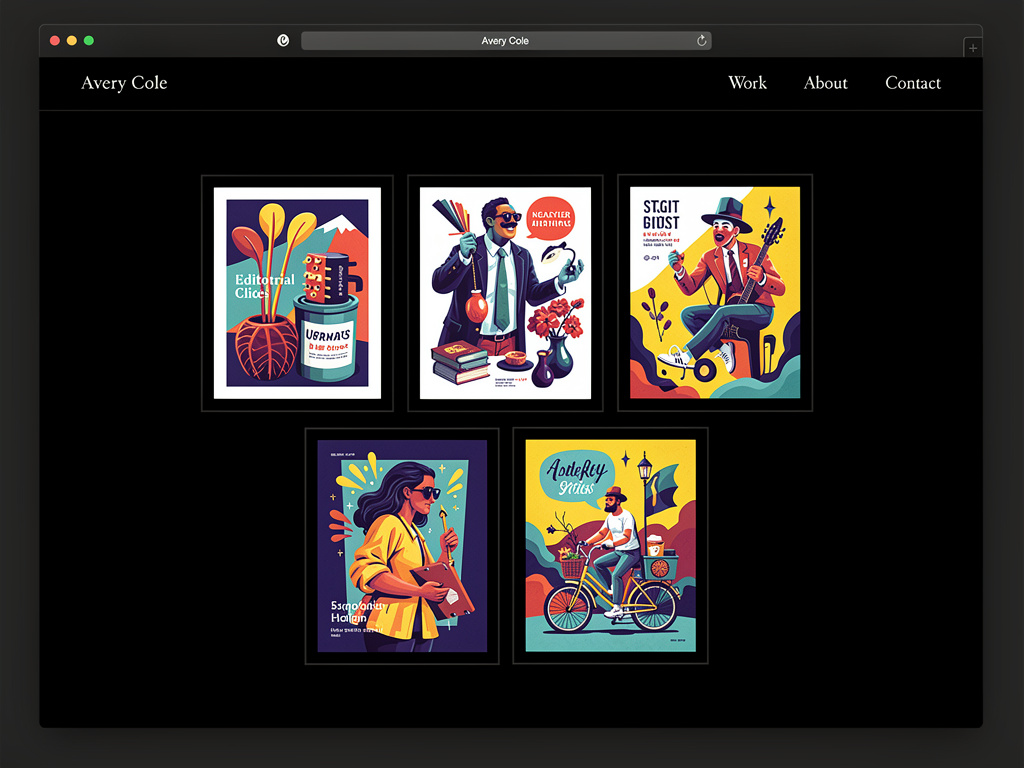
You must select a specialized portfolio builder that utilizes "Uncropped Masonry" architecture. The platform's algorithm must intelligently analyze the exact native dimensions of your uploaded artwork (no matter how weirdly shaped it is) and mathematically structure the website grid around the original image without cropping a single pixel.
3. The Need for Institutional Silence
Retail website templates are inherently loud. They are packed with complex navigation bars, massive footer menus filled with legal links, social media integration banners, and complex checkout UI.
For a B2B Fine Artist, "loud" translates immediately directly to "cheap." If you walk into a prestigious contemporary art gallery, the walls are completely blank and silent.
What Artists Must Demand: A specialized portfolio maker must give the artist the power to turn everything off. You need the ability to eradicate the footer, minimize the header into a nearly invisible typography block, and force the screen entirely white. Your website builder must understand that for an artist, Negative Space is the most valuable premium feature of all.
Stop forcing your delicate physical artwork into bloated retail templates designed for dropshipping. By launching your independent brand on Portfoliobox, visual artists secure the pristine typography, uncropped masonry grids, and uncompressed server power required to effortlessly mimic the institutional silence of a massive global art gallery — no coding required.