The entertainment industry—spanning video games, feature animation, television, and publishing—is arguably the most competitive sector in the creative world. Thousands of incredibly talented artists vie for a handful of studio roles or high-profile freelance contracts. In this arena, raw drawing ability is the baseline, not the differentiator. What separates the hobbyists from the hired professionals is the strategic execution of their character design portfolio.
A common misconception is that a character design portfolio is just a gallery of cool, finished illustrations. In reality, art directors are looking for something much deeper: they are looking for design thinking, anatomical understanding, versatility, and the ability to solve narrative problems visually.
If you want to build industry authority and consistently book top-tier work, you must perfect how you present your characters. Here is a deep dive into the strategy behind a winning character design portfolio.
Beyond the 'Glamour Shot'
The most frequent mistake emerging character designers make is filling their portfolio exclusively with "glamour shots"—fully rendered, highly polished, standalone illustrations of characters striking a cool pose.
While you should absolutely include a few of these to demonstrate your rendering skills, glamour shots do not prove that you are a good character designer. They only prove you are a good illustrator. A true character design portfolio must demonstrate how a character functions within a production pipeline.
To prove this, your portfolio case studies need to go deeper into the mechanics of the character.
The Core Components of a Character Case Study
When an art director at an animation studio or game developer looks at your portfolio, they have specific, practical questions in mind. Can this character be modeled in 3D? Can an animator easily move this character? Can the artist draw the same face consistently from different angles?
Your portfolio must answer these questions proactively. A complete character design case study should include:
1. The Turnaround (Model Sheet)
This is the industry standard. You must show your character from multiple angles (front, 3/4 front, profile, 3/4 back, back) standing on a consistent ground line. The proportions must remain perfectly consistent across all views. Turnarounds prove your understanding of 3D volume and structural anatomy.
2. Expression Sheets
A character is defined by their acting. Dedicate a page to exploring the character's facial expressions. Don't just draw generic "happy, sad, angry" faces. Draw expressions that are specific to the character's unique personality. How do they look when they are lying? How do they look when they are trying to hide a laugh? This proves you understand narrative acting.
3. Pose Sheets (Action Lines)
Show the character in motion. These should not be fully rendered illustrations, but dynamic, loose sketches that emphasize the line of action and the character's silhouette. Can we tell what the character is doing, and what their attitude is, just by looking at their solid black silhouette?
4. Shape Language and Proportion
Include the rough developmental sketches that show how you arrived at the final design. Show the underlying geometric shapes (circles for friendly characters, triangles for aggressive ones) that form the basis of your design. This proves you understand the psychological principles of character design, rather than just drawing what looks "cool."
Tailoring to the Target Industry
"Character design" is a broad term, and different industries have vastly different requirements. You cannot use the same portfolio to apply for a job at a mobile games company, a feature animation studio, and a children's book publisher.
- For Animation: The focus must be on volume, simplicity, and ease of movement. Characters need to be designed so that an entire team of animators can draw them consistently. Highly detailed, heavily rendered designs will actually count against you here.
- For Video Games: Depending on the studio, there is often a higher emphasis on concept art, costuming, and highly detailed rendering. You need to show that you can design armor, weapons, and intricate textures that look good in a 3D engine.
- For Publishing: The emphasis is often on charm, expressiveness, and the ability of the character to carry a narrative across multiple pages.
If you are targeting multiple industries, your portfolio website must be organized into clear categories so art directors can immediately find the work relevant to their needs.
Presentation and Professionalism
Finally, the way you present these complex case studies on your website matters immensely. Do not force art directors to click through complex carousels or download massive PDFs.
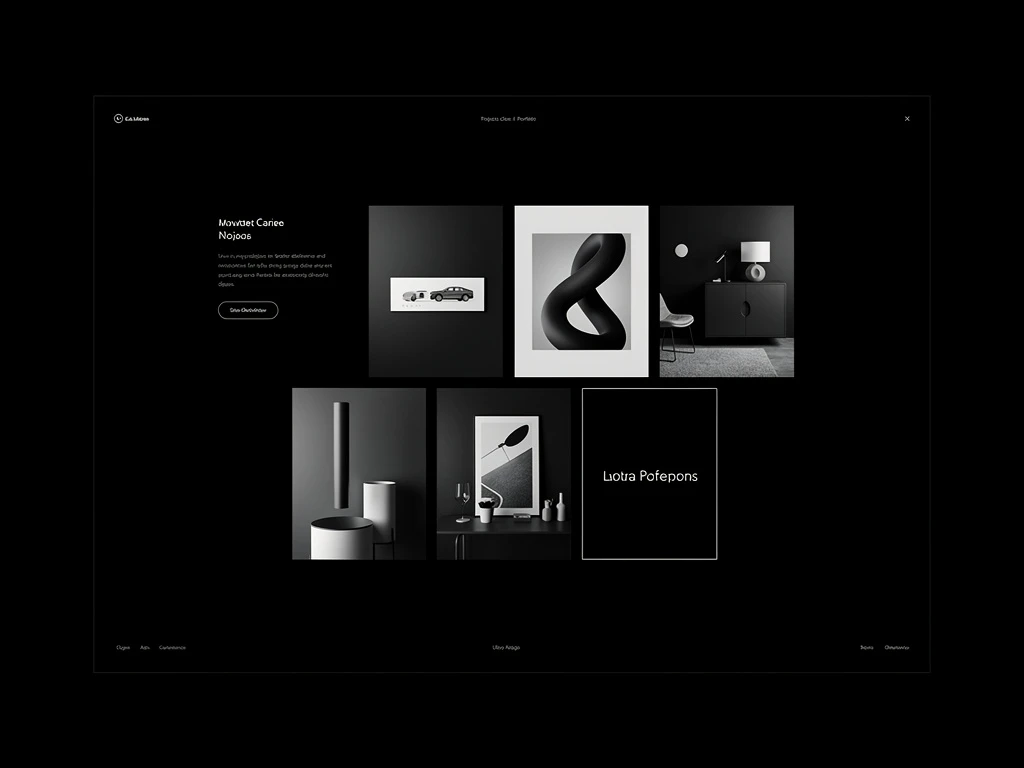
Your website should feature a clean, white or dark gray background. The navigation should be dead simple. Use a vertical scrolling layout for your case studies, leading the viewer logically from the initial rough sketches, through the expression and pose sheets, culminating in the final turnaround and glamour shot.
Building your portfolio doesn't have to be complicated. With Portfoliobox, you can create a stunning portfolio website in minutes — no coding required. Use it to cleanly structure your deep-dive character case studies, establish your industry authority, and start booking the character design jobs you’ve always wanted.