For a fine artist, the transition from creating physical art to curating a digital gallery is often fraught with missteps. Because artists are inherently creative, they often assume their website needs to be a complex, highly "creative" experience.
This usually results in digital clutter. Complex navigation menus, auto-playing music, and chaotic image grids overwhelm the viewer. If a high-end collector gets confused or frustrated on your website, they will leave without buying anything. If you want to transition from a chaotic blog to a premium digital gallery, here are the best problem-solving art portfolio ideas used by the industry's top professionals.
The Problem: The Overwhelming Homepage
The most common mistake artists make is using their homepage as a storage locker for every piece of art they have ever created. A massive grid of 50 thumbnail images causes immediate visual fatigue. The collector doesn't know where to look first, so they leave.
The Solution: The "Hero" Statement Piece
In a physical gallery, there is always one massive, breathtaking painting placed at the entrance to draw people in. You must replicate this digitally. The Portfolio Idea: Utilize the "Hero" layout. Your homepage should consist of a single, massive, uncompressed photograph of your absolute best artwork. It should stretch from edge to edge on the screen. There should be almost no text. This forces the viewer to confront your mastery immediately, setting a luxurious tone before they even click into your galleries.
The Problem: The "Lost in the Grid" Phenomenon
If you paint varying sizes of artwork—for example, wide panoramic landscapes and tall, vertical portraits—putting them into a standard square website grid will ruin them. The software will auto-crop your paintings, chopping off important details and ruining your composition.
The Solution: The Editorial Masonry Layout
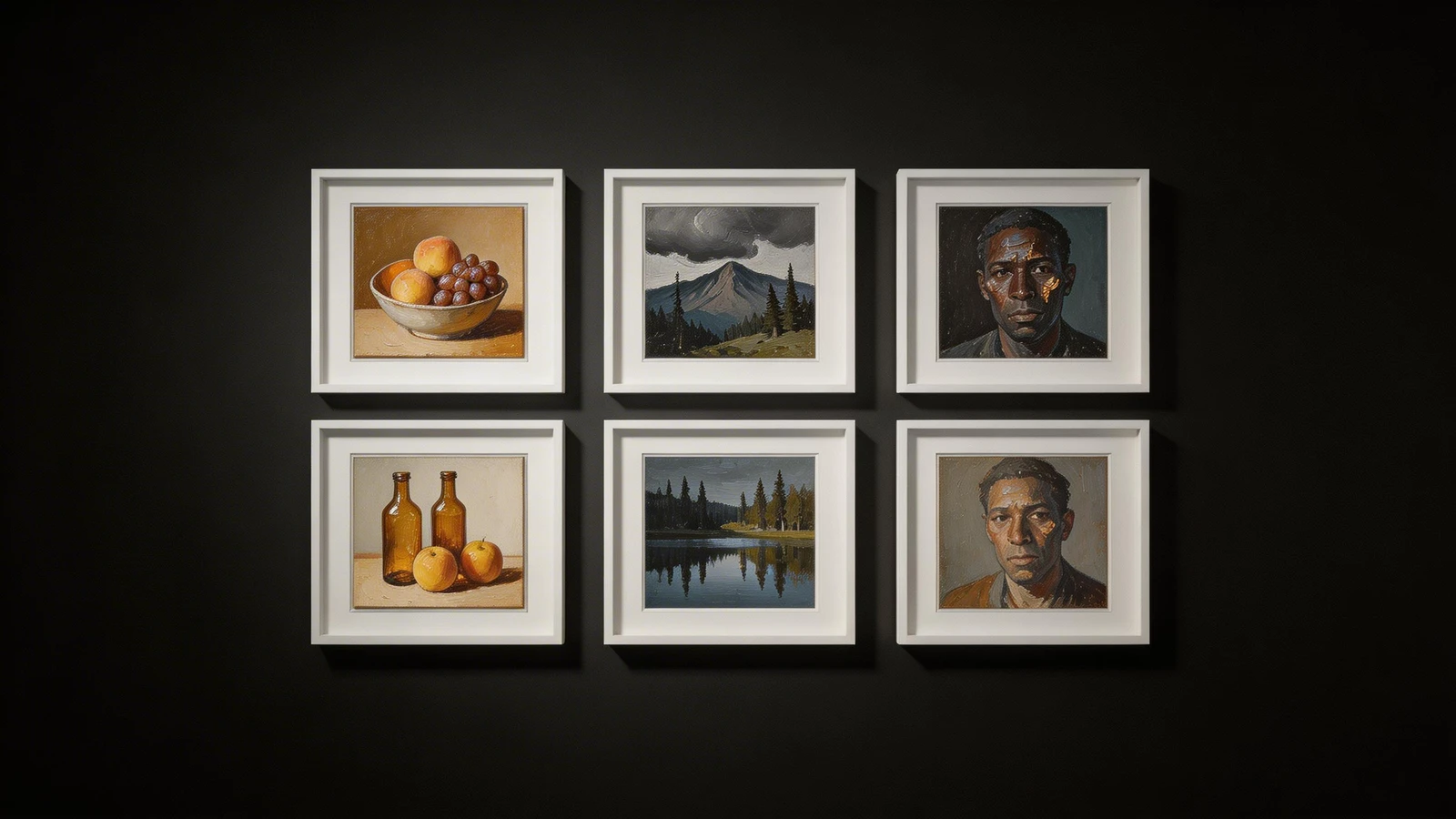
The Portfolio Idea: Ditch the uniform grid and adopt an asymmetrical masonry layout. This layout (often seen in high-end editorial magazines) allows images of different aspect ratios to interlock seamlessly. It prevents auto-cropping and creates a dynamic, rhythmic scrolling experience. It feels curated and deliberate, rather than automated.
The Problem: The "Flat JPEG" Devaluation
A massive problem with digital portfolios is that they strip the physical reality away from the art. A $5,000 textured oil painting looks like a flat, digital JPEG on a smartphone.
The Solution: Contextual and Macro Photography
The Portfolio Idea: Never just upload the flat scan of the painting. You must prove the physical existence of the object. For every major piece, include a secondary "macro shot"—an extreme close-up showing the physical ridges of the paint or the tooth of the canvas. Additionally, include a photo of the painting hanging on a wall to establish its scale.
The Problem: The Dead-End Gallery
An artist will create a beautiful gallery, but at the bottom of the page, there is nothing. If a collector wants to buy a piece, they have to navigate away, find a contact page, and type out an email.
The Solution: Frictionless E-Commerce
The Portfolio Idea: A professional portfolio is a sales funnel. Integrate an e-commerce block directly beneath your galleries. Allow the collector to see the price, click "Purchase," and check out with a credit card immediately.
Executing these ideas requires a platform that understands visual curation. With Portfoliobox, you can effortlessly implement these high-end art portfolio ideas, building a world-class digital gallery that actually converts visitors into collectors — no coding required.