The transition from a university design laboratory to a ruthless, profit-driven advertising agency is one of the harshest wake-up calls a young creative will ever experience.
In school, a graphics project is graded on theoretical concepts, risk-taking, and emotional expression. In the commercial industry, a graphics project is judged entirely on whether it solves a business constraint on time and under budget.
When an Art Director reviews a graphic design student portfolio, they are actively looking for the student who requires the least amount of "corporate training." They want proof that you understand commercial hierarchy, deadlines, and real-world brand application. If your website is merely a gallery of abstract art school experiments, you will struggle to find employment. Here is exactly how to structure your student portfolio to secure that critical first agency job.
Eradicate the Class Syllabi Vernacular
The fastest way to signal that you are an inexperienced amateur is to title your portfolio projects after your college courses.
If an agency sees a project titled "Design Theory 304: Semester Final," they subconsciously dismiss the work as an academic exercise. You must violently translate your homework into commercial nomenclature.
- The assignment where you designed a fake logo for a bank becomes "Corporate Brand Identity: FinTech Concept."
- The typography poster you made for a fictional band becomes "Event Marketing & Typography Execution."
- The app screen wireframes you built in UX class become "Mobile Interface & Interaction Design."
By simply adopting the language of the agencies you are applying to, you drastically elevate your perceived value.
Turn Flat Vectors into Physical Mockups
Agencies do not sell flat Adobe Illustrator files to their clients; they sell the application of those files in the physical world.
A massive mistake students make is exporting a logo as a flat PNG and uploading it raw to their portfolio grid. While the logo might be beautiful, the Art Director has to mentally imagine how it looks on a storefront. Remove the imagination barrier.
If you design a speculative brand identity, download high-resolution Photoshop mockups of packaging, business cards, billboards, or iPhone screens. Marry your flat vector work to these 3D physical environments. Presenting a flat logo is homework; presenting that logo embossed elegantly onto a textured leather menu proves you understand physical scale and production realities.
The Power of the 'Self-Initiated' Spec Project
Agencies know that student work is often heavily guided by professors. To truly stand out, your portfolio must contain at least one substantial 'Speculative' (Spec) project that you initiated entirely on your own time.
Find a local coffee shop or a recognizable brand with terrible design. Redesign their entire identity from scratch. Build the logo, design their Instagram marketing templates, structure a hypothetical app interface, and write a paragraph explaining exactly why your design solves their current marketing failure.
When you feature a massive, multi-faceted Spec Project at the very top of your digital portfolio, you prove to agencies that you possess autonomous drive and comprehensive commercial problem-solving skills.
Clean Up the Digital Architecture
As a design student, you are heavily judged on the design of the portfolio website itself, not just the graphics contained within it.
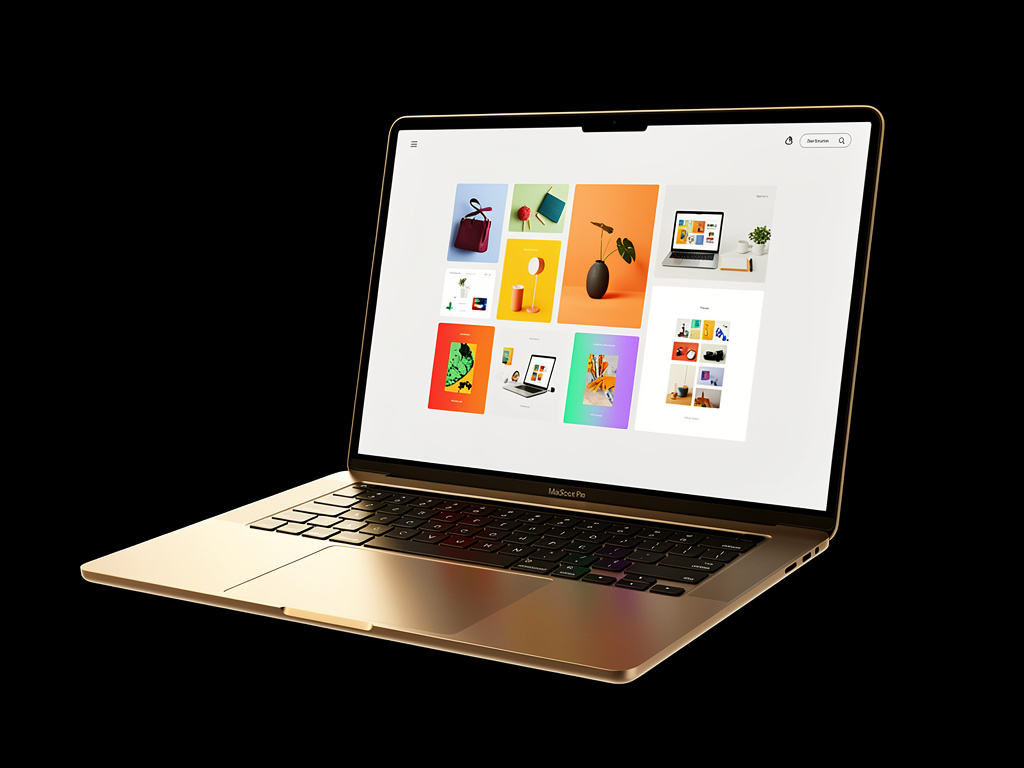
Do not try to show off your rudimentary coding skills by building a chaotic, overly animated website that takes ten seconds to load. Agencies despise slow portfolios. Your website should be brutally minimal. The navigation should be invisible. The background should be a stark neutral color. The margins around your graphics should be mathematically precise. If the overarching architecture of your website is clean, the Art Director trusts your typographic judgment.
Securing your first design job shouldn't require battling complex website code. By migrating your final projects to Portfoliobox, students can effortlessly snap their graphics into professional, agency-standard grids and launch a pristine commercial presence in an afternoon — no coding required.