It may seem counterintuitive for an established fine artist to look toward high school academics for career advice. However, if your digital portfolio feels disjointed, chaotic, or is failing to attract gallery representation, the strict structural rules of the College Board's AP Art portfolio offer a surprising masterclass in professional curation.
The AP Art portfolio isn't just about proving you can draw; it’s about proving you can think cohesively and present your ideas clearly. These are the exact traits high-end art collectors and gallery curators look for. Here are 5 academic secrets from the AP Art portfolio that you can apply immediately to elevate your professional website.
1. The "Sustained Investigation"
The core requirement of the AP Art portfolio is the "Sustained Investigation." Students must create a series of works that explore a single thematic concept deeply, rather than submitting a random assortment of unrelated drawings.
How to apply it: If your website features a hyper-realistic oil portrait next to an abstract acrylic pour and a digital logo design, you look like an unfocused hobbyist. Curators want to represent artists with a clear, defined voice. Organize your website into specific "Collections" or "Series." Make sure every piece in a gallery visually and thematically supports the others.
2. Evidence of Process
The AP board requires students to submit images showing the evolution of their ideas—sketches, material tests, and compositional drafts.
How to apply it: Collectors love a narrative. They don't just want to buy a painting; they want to buy the story behind the painting. Don't just upload the final canvas. Include a few process shots: your messy palette, your studio setup, or the charcoal underpainting. This demystifies your work and adds immense emotional value to the final piece.
3. Strict Curatorial Limits
The AP Art portfolio places a hard cap on the number of pieces a student can submit. They are forced to edit out their mediocre work.
How to apply it: The biggest mistake fine artists make online is uploading every painting they have ever finished. You are judged by the weakest piece on the screen. Curate ruthlessly. A gallery of 8 breathtaking, cohesive paintings will secure gallery representation much faster than a cluttered grid of 40 inconsistent ones.
4. Uninterrupted Presentation
The College Board demands clean presentation. No messy backgrounds, no distracting watermarks, and no chaotic borders.
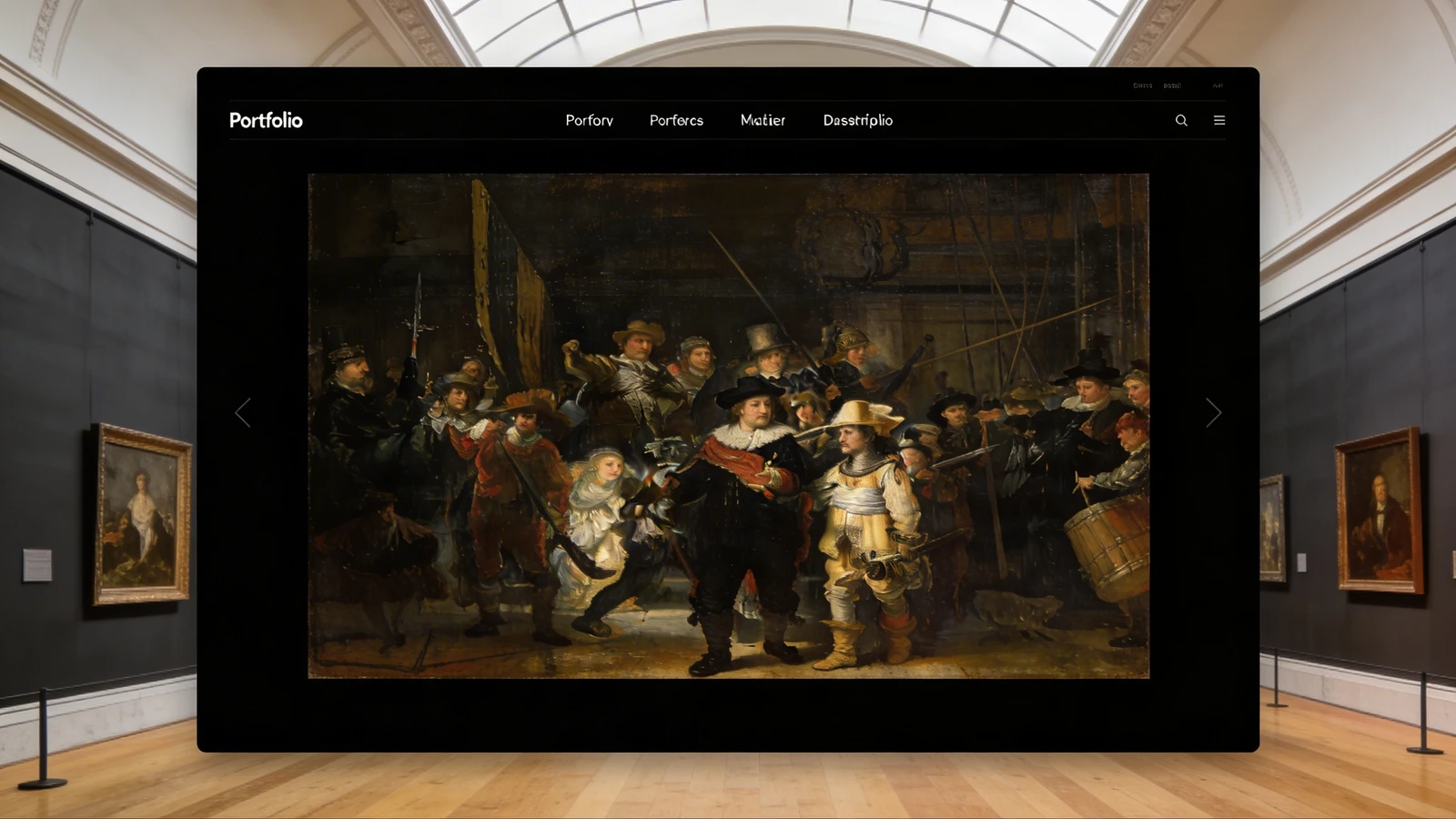
How to apply it: Your website should act as an invisible frame. Do not use flashy website templates with bright background colors or aggressive animations. Use stark white or deep black backgrounds. The design of the website must disappear so the texture and color of your fine art can command the viewer's attention.
5. Technical Context (The Metadata)
In an AP submission, students must clearly list the medium and dimensions of every piece.
How to apply it: Never upload a painting without context. A curator needs to know if the painting is 10 inches wide or 10 feet wide. Always include clear metadata beneath your images: Title, Year, Medium (e.g., Oil on Linen), and exact dimensions.
Structuring your fine art portfolio correctly is the first step toward a profitable career. With Portfoliobox, you can effortlessly apply these curatorial secrets, building an elegant, gallery-ready website in minutes — no coding required.