Marketing guide for creatives
Get seen and get clients
The marketing guide for creatives
Your portfolio is live. Now people need to see it.
Most good work goes unseen because nobody was told about it. That's fixable, and it doesn't take a marketing budget or a talent for selling yourself. It takes a few small things, done this week, and a habit after that.
This guide is short on purpose. Start with the ten things below. Each one takes less than an hour. The rest of the guide is there when you want more.
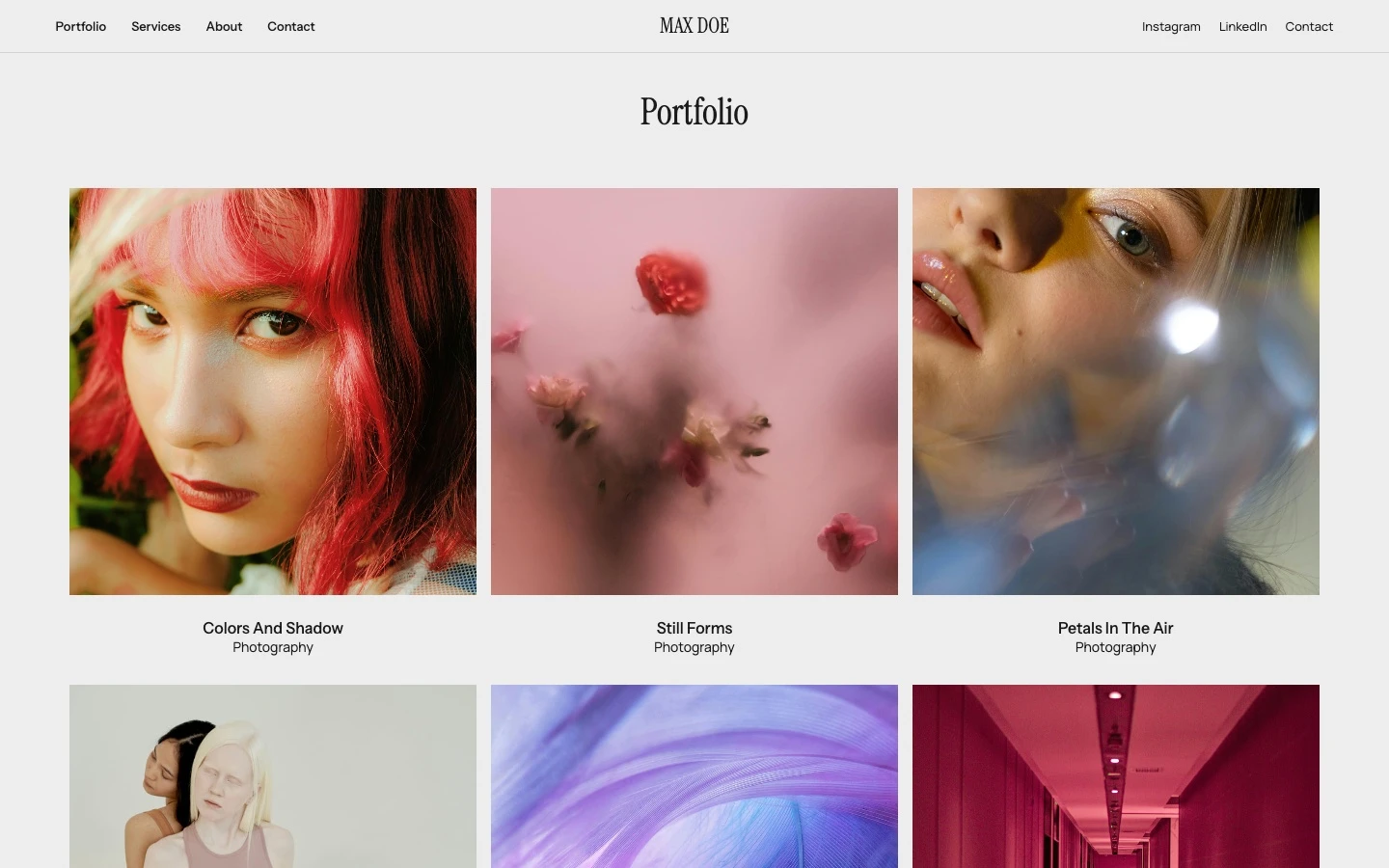
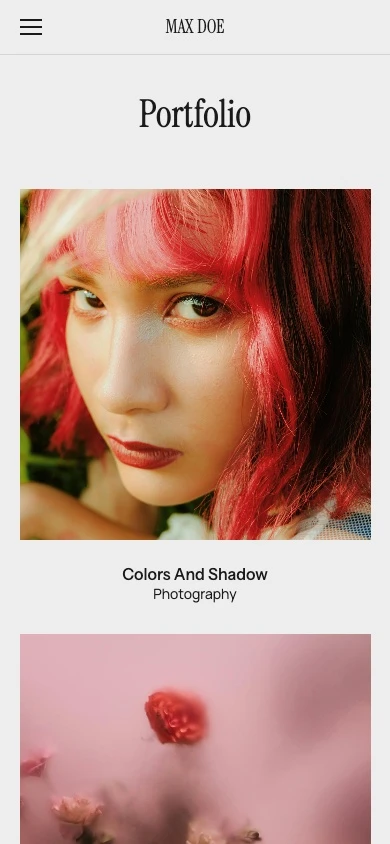
10 things to do in your first week live
Make it ready
Get it seen
Turn it into work
Done all ten? You're ahead of most people with a portfolio. The sections below go deeper, in the same order.
1. Make your site work for you
Before you send anyone your link, spend an hour on the four things a visitor checks first. Someone who might hire you gives your site a minute, maybe two. In that minute they want to answer one question: can this person do the job I have in mind?
Show ten to twenty pieces. Your best ones.
Not everything you've made. The work you'd be happy to be hired for again. One weak piece pulls the rest down, because people remember the worst thing they saw.
Group the work by the kind of jobs you want more of. If you shoot weddings and portraits but want more portraits, put portraits first. Each group becomes a page.
Give every project one line of context
What was it, who was it for, what was your part? "Menu illustrations for a café in Malmö. Six drawings and the cover." One line turns a picture into proof that you've done the job before.
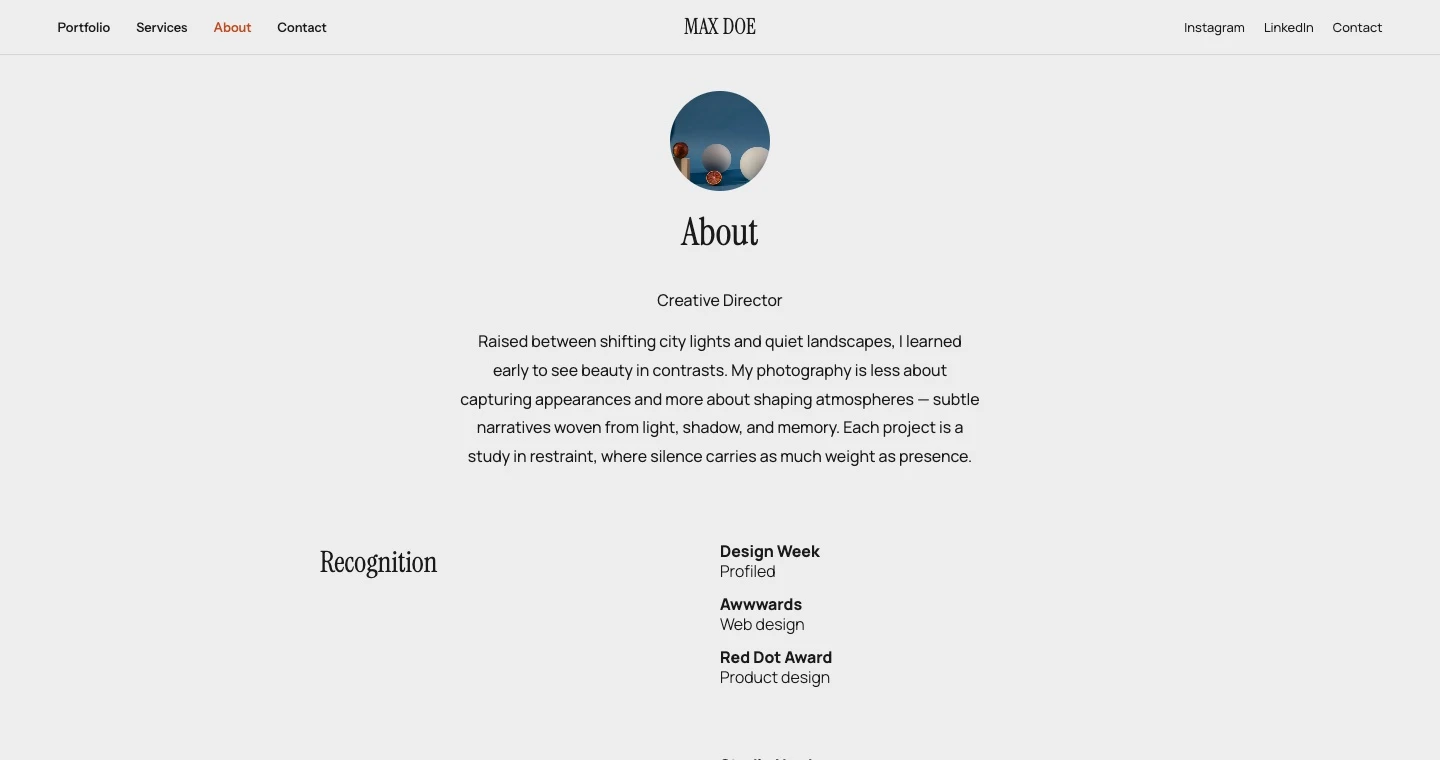
An About page with a face
Three sentences: who you are, who you work for, where you are. And a photo of you. People hire people, and a face makes the step to writing to you smaller.
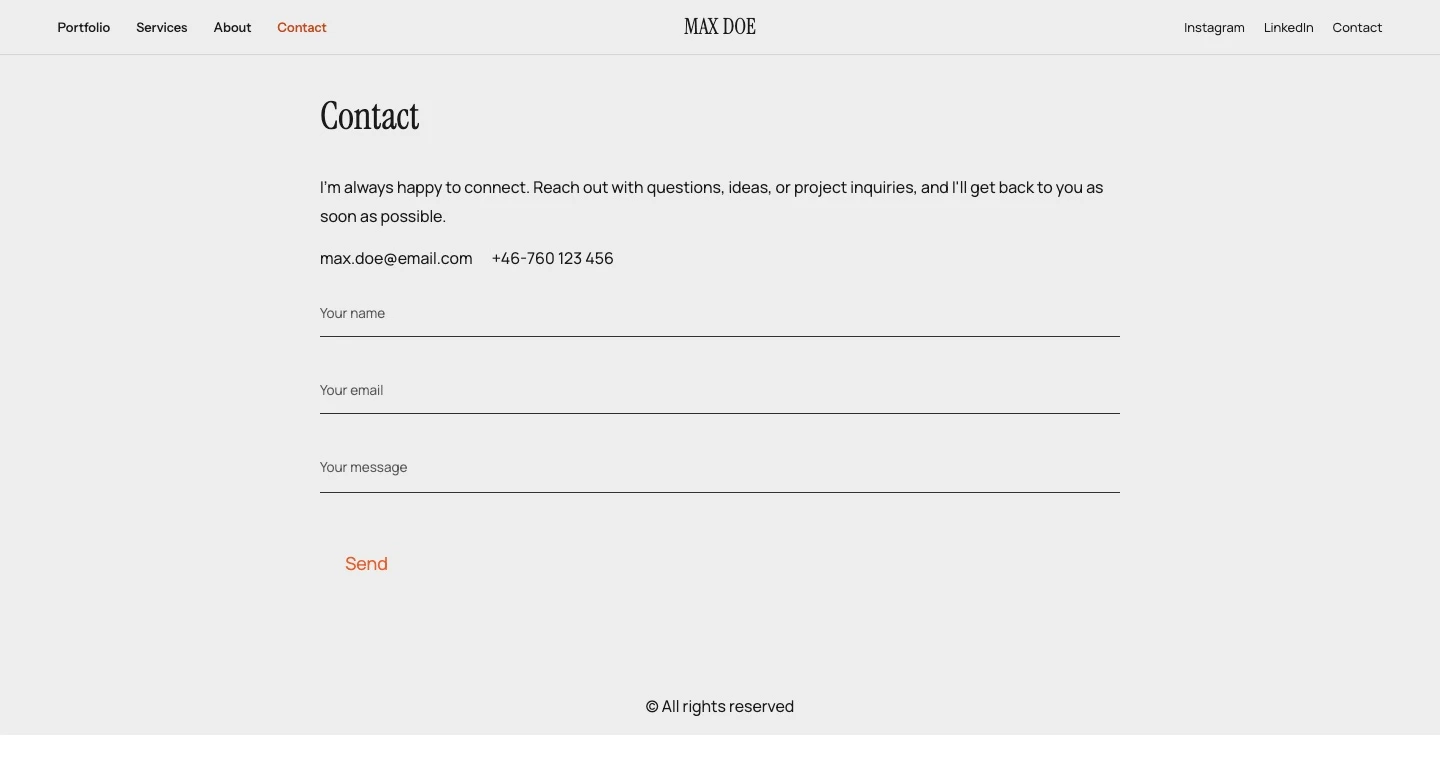
Make it obvious how to hire you
- A contact page with a form, so an enquiry is one message away.
- A line that says what you take on: "Available for editorial and portrait commissions from January."
- Prices, if you can. Even "from" helps. It filters out the wrong enquiries and reassures the right ones.
- If you sell time slots (a shoot, a lesson, a consultation), let people book them on your site.
 About
 Contact
Your own name as the address
A site at yourname.com is easier to say out loud, easier to remember and looks like a business. Clients notice it on a business card and in an email signature. You can connect a name you already own, or find one when you publish.
2. Get it seen this week
Start with people who already know you
The first visitors to your portfolio won't come from Google. They'll come from people who know you. That's a good thing: they're the ones most likely to hire you, recommend you or share it.
Write to ten of them, one at a time. Friends who work in your field, former colleagues, teachers, people you've worked for. Keep it short:
Asking for an opinion is easier to send than asking for work, and people like being asked. Some of them will pass it on.
Share it once, properly
One post, one story. Lead with your single best piece, not a screenshot of the whole site. Say in one sentence what kind of work you're open to. Put the link where people can tap it: in your bio, or in the story's link sticker.
Then don't stop at one. Every new project is a new reason to post, and every post can link back to your site.
Put the link everywhere you already are
- Instagram bio, TikTok bio, LinkedIn's website field
- Your email signature, so every mail you send carries it
- Behance, Dribbble, ArtStation or whatever your field uses
- Your CV, your business card, your invoices
Each of these is a door that stays open while you work.
Get found on Google
People search for what they need: "wedding photographer Leeds", "children's book illustrator", "architect portfolio Toronto". You want your site to answer some of those searches.
- Give your site a clear title. What you do and where: "Anna Berg, illustrator in Manchester". You set it in your site's SEO settings, together with a one-line description.
- One page per kind of work. A page called Wedding photography has a better chance with "wedding photographer" than a page called Work.
- Write a few real sentences on each page. Search engines read words, not pictures. A short paragraph per page about the work and who it's for goes a long way.
- Tell Google the site exists. Add it in Google Search Console. It asks you to verify that the site is yours; paste its verification tag into your site's settings.
- Get linked. Every profile, directory, school page or client site that links to you helps people and search engines find you.
Google takes days or weeks to show a new site. Do it now and let it run in the background.
3. Turn attention into clients
Visitors are nice. Clients pay the rent. The step between them is smaller than it looks: someone has to ask, and someone has to say yes. Usually you have to do the asking first.
Ask. Directly, and to the right people
Make a list of ten people who could hire you or know someone who could. Start with the ones who have paid for work like yours before: a café that commissions illustrations, an agency that books photographers, a studio you interned at, a friend who runs a small business.
Then write to them one at a time. Short and personal beats clever. You can copy this:
Change the details, keep the shape: your link, what you do, when you're available, one easy thing they can do. Send ten. Not everyone will answer, and that's normal. The ones who do are worth the other nine.
Answer fast, and make it easy to say yes
When an enquiry comes in, answer the same day if you can. Ask what they need, by when, and what it's for. Then send a quote that leaves nothing to guess:
- what you'll deliver
- when
- how many rounds of changes are included
- the price, and when it's paid
You can make quotes and invoices in Portfoliobox and send the client a link, so they can accept the quote online.
Price your work
Start with a floor: the lowest price at which the job is still worth doing. Then set a day rate, and build two or three packages around it ("a logo", "a logo and a small brand kit", "a full identity"). Packages are easier to buy than hours.
Don't price against the cheapest person you can find. Price against what the work is worth to the client. Raise your prices after your fifth happy client, and again when you're booked a month ahead.
Collect proof
After every job that went well, ask for two sentences:
Most people say yes, because you asked when they were happy. Put the answers on your site next to the work, with their name and company. One real quote from a client does more than a page about how good you are.
write your list of ten, and send the first three messages.
4. The longer game: pick two
You can't do everything, and you don't need to. Pick the two that suit you and the people you want to work for. Do them every week for three months before you judge them.
Social media you enjoy making
Choose the platform where your clients look, not the one everyone talks about. Post the kind of thing you'd enjoy making anyway: finished work, the process, the story behind a piece. Answer comments and messages. Be yourself; people follow a person more readily than a logo.
A small newsletter
The people who sign up chose to hear from you, and nothing about an algorithm decides who sees it. Put a signup form on your site, and a sheet at any event where you show your work. Write when you have something to say: a new project, an exhibition, a free slot next month. Four times a year is enough to start.
Show your process
A short text or video about how you made something is useful to other people and shows your skill better than the result alone. Pick a format you like (writing, video, photos) so you keep going. Put it on your site and share it from there.
Communities and competitions
Join the groups where your field talks: forums, Discord servers, local associations, alumni groups. Help first, promote second. Enter competitions that fit your work; even without a win, being shortlisted is something to share and to put on your site.
Meet people
- Events and fairs. Go with a purpose, even if you're not showing anything. Talk to exhibitors and visitors. Follow up within a week with a short message and your link.
- Exhibitions. Showing your work, even in a café or a shared studio, gives you a reason to invite people and a story for local press.
- Word of mouth. Your best marketing is a happy client telling a friend. Do good work, be easy to work with, and tell people you're open for work.
- Local press. A local angle ("a Manchester illustrator draws the city's cafés") is what local editors look for. A short, friendly pitch with two images and your link.
- Agencies. Some agencies represent creatives in your field and find work for you. Your portfolio is your application. Write to them personally.
5. Earn more from your work
Clients aren't the only way to get paid. A few of these can sit on your site and work alongside commissions.
Sell your services clearly
Say on your site what you offer, for whom, and roughly what it costs. Show past work and testimonials next to each service. If you sell time (a shoot, a lesson, a session), let people book a slot directly.
A shop on your site
Prints, originals, merchandise, digital files. You can add a store to your Portfoliobox site and take payments there. Good photos and a short story behind each product sell better than a bare price.
Prints and print-on-demand
If you don't want to handle stock and shipping, print-on-demand services print and ship your designs on posters, apparel and home goods when someone orders. Link to your shop there from your site.
Licensing and stock
Photos, illustrations, music and design assets can earn money every time someone licenses them, on stock and asset marketplaces. It's slow money, but it keeps coming from work you've already made.
Marketplaces and freelance platforms
Craft marketplaces and freelance platforms bring buyers who are already looking. Keep your portfolio as the home your listings point back to, so the clients you win there can find you directly next time.
6. Your first month, week by week
Week 1: Make it ready and tell people
- Do the ten things at the top of this guide.
- Send your link to ten people who know you.
- Put the link in every profile you have.
Week 2: Ask for work
- Write your list of ten people who could hire you.
- Send the message from section 3 to all ten.
- Add your site to Google Search Console.
Week 3: Make it easy to say yes
- Write your prices or packages, even rough ones.
- Answer every enquiry the same day.
- Ask your last happy client for two sentences, and put them on your site.
Week 4: Start the long game
- Pick your two from section 4.
- Post one new project, and write one paragraph about how you made it.
- Look back: which messages got answers? Do more of what worked.
After a month: keep adding your newest work and taking out the weakest. A portfolio that changes gives people a reason to come back, and gives you a reason to share it again.
Portfoliobox has made portfolio websites for creatives for 15 years.