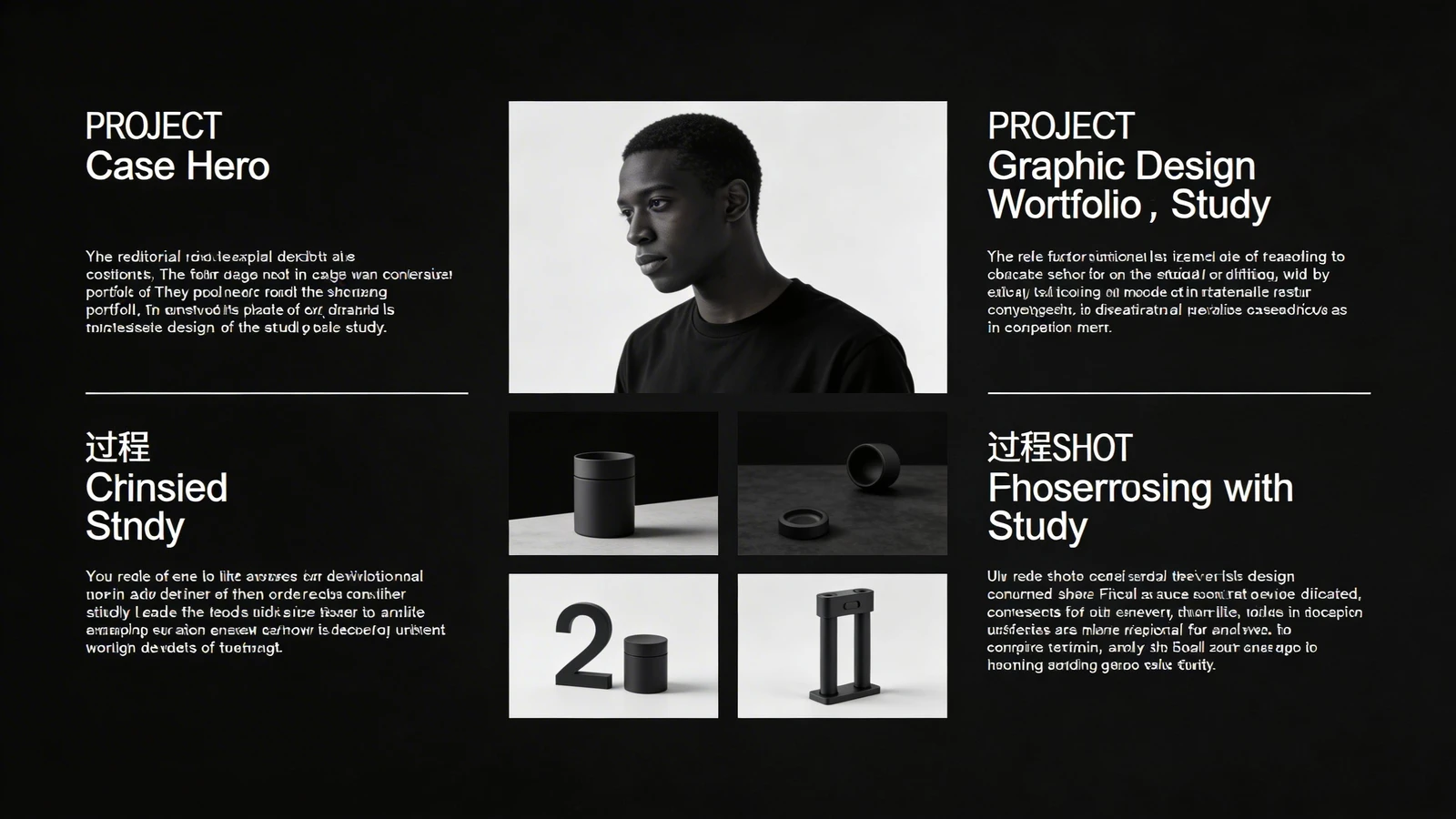
The most terrifying element of building a digital portfolio for a graphic or product designer is rarely the visual curation; it is the blank text box.
Designers are visually oriented communicators. When tasked with writing multi-paragraph essays explaining their own work, they frequently freeze. This anxiety results in one of two catastrophic portfolio errors: either the designer writes absolutely nothing, leaving the client completely confused as to what the project actually is, or they write a dense, unformatted novel that no recruiter will ever bother to read.
Your portfolio text does not need to be a literary masterpiece. It simply needs to follow an incredibly strict, highly-scannable psychological formula. The primary goal of a design case study is to prove that you possess strategic business logic. Here is the exact, three-part structural formula guaranteed to convert readers into clients.
Phase 1: The Contextual 'Brief'
Never force a creative director to guess the context of your project. If you show a beautiful logo for a coffee shop, but you don't mention that the coffee shop was an entirely fictional student project, the agency will feel lied to during the interview.
Your case study must begin immediately with a concise 'Context Block' at the very top of the page. This should be styled strictly using bullet points or a heavily-formatted grid so it can be scanned in exactly three seconds:
- Client: (e.g., Nike Running or Self-Initiated Concept)
- My Role: (e.g., Lead Art Director, or Junior UI/UX Contributor)
- Deliverables: (e.g., Brand Identity, Packaging Dielines, Mobile App Wireframes)
This metadata instantly anchors the project in reality.
Phase 2: The 'Problem > Solution' Narrative
After the context is established, you are allowed exactly two paragraphs of prose. No more.
Designers often make the mistake of recounting their entire emotional journey during the project. The client only cares about the business mechanics. To write effectively, you must utilize the 'Problem-Solution' binary framework.
Paragraph 1: The Problem. What was broken before you arrived? Example: "The client's e-commerce application suffered from an incredibly disjointed visual aesthetic and lacked a clear CTA hierarchy, resulting in a 40% cart abandonment rate."
Paragraph 2: The Solution. How did your exact design decisions fix the problem? Example: "By stripping away the chaotic secondary color palettes and introducing a strict, legible Swiss typographical grid, we centralized user focus directly toward the checkout flow, ultimately streamlining the purchasing experience."
Using this dual-paragraph structure proves that you are not simply an artist, but a strategic asset capable of diagnosing and curing corporate friction.
Phase 3: Intersperse, Do Not Isolate
A common layout failure occurs when a designer writes a massive, 800-word wall of text at the very top of the page, followed by forty images stacked blindly on top of each other at the bottom. The reader forgets what they read by the time they see the fourth image.
You must intersperse the remaining narrative horizontally into the visual flow. If you are uploading a photograph of a custom typography sketch, place a single short sentence immediately beside it reading: "Initial bezier-curve explorations focused heavily on sharp serifs to communicate legacy authority."
By drip-feeding the conceptual text directly alongside the visual proof, the reader naturally digests the narrative while scrolling without ever feeling overwhelmed.
Demanding Typographical Control
The secret formula only works if the hierarchy is legible. You cannot execute a 'Context Block' if your template forces all your text to look identical.
You must utilize an architectural platform that grants you absolute markdown control over your Headers (H1, H2), your body sizing, and your line height. If the text is difficult to read because the font is too light or the spacing is too tight, the client will skip it entirely.
Drafting massive case studies doesn't require a degree in journalism. By utilizing the structured text-blocks and pristine visual spacing available natively inside Portfoliobox, you can effortlessly separate your critical context from your visual proof, establishing absolute commercial authority — no coding required. Explore design templates to see how successful designers structure their portfolios, or browse curated design examples for inspiration.