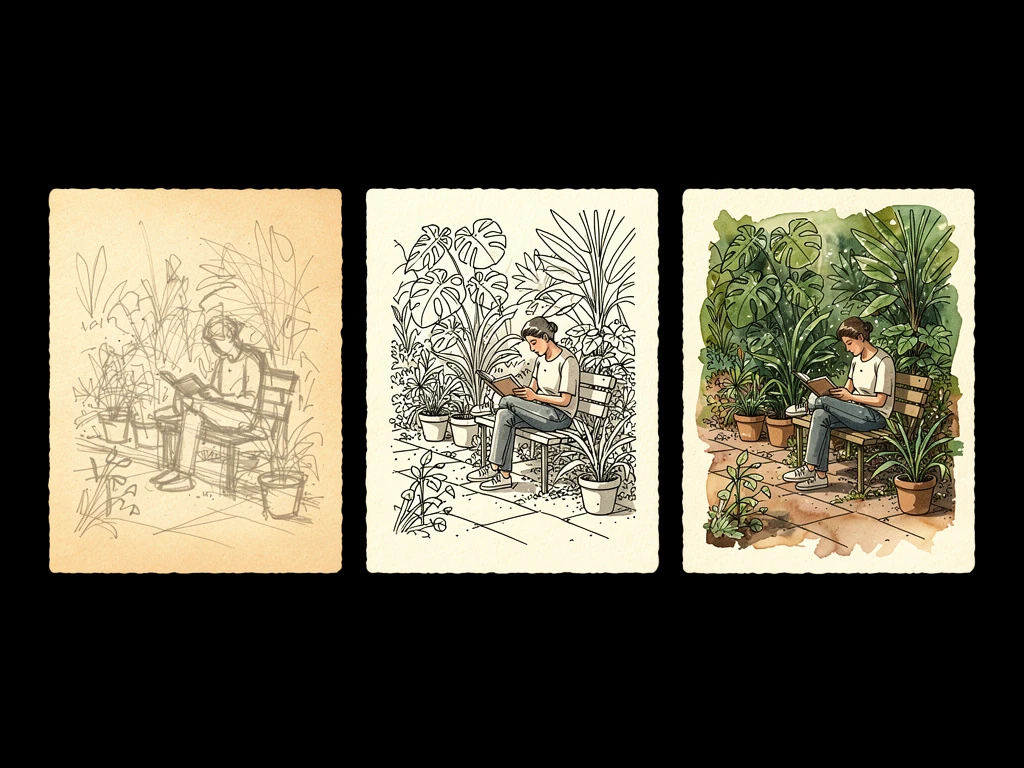
When building a professional illustration portfolio, many artists look exclusively at their competitors for inspiration. However, some of the most effective structural lessons come from an unlikely source: the academic world.
If you analyze the highest-scoring AP 2D Art portfolio examples from the College Board, you will notice they follow a very strict, highly effective visual framework. The students aren't just graded on their drawing ability; they are graded on their ability to present a cohesive narrative. As a commercial illustrator, your clients are looking for that exact same cohesion. Here is how to apply the rigorous standards of AP art to build a website that books high-end jobs.
1. The Power of "Sustained Investigation"
The core requirement of any top-tier AP 2D Art portfolio is the "Sustained Investigation"—a series of 15 pieces that thoroughly explore a single, unified concept.
How to apply this to your website: The most common mistake amateur illustrators make is treating their website like a random sketch dump. They upload anime fan art next to a hyper-realistic charcoal portrait, followed by a vector logo. This creates brand confusion.
Art directors want to hire specialists. Look at the best AP 2D Art portfolio examples; they are incredibly cohesive. Your online galleries should act as your own "Sustained Investigation." If you are pitching yourself as a dark fantasy concept artist, every single image on your homepage must support that specific narrative. Hide your unrelated stylistic experiments on a separate page or remove them entirely.
2. Documenting the Creative Pipeline
To score a 5 on the AP exam, students must submit process images showing how their ideas evolved from rough sketches to final compositions.
How to apply this to your website: Commercial clients do not just buy the final illustration; they buy your problem-solving ability. A beautiful final image is great, but a client needs to know you didn't just get lucky.
Create dedicated "Case Study" pages for your biggest commercial projects. Show your thumbnail sketches. Show the color scripts you presented to the art director. Write a brief paragraph explaining why you made specific visual choices. This transparency proves you have a professional, repeatable pipeline.
3. The "Selected Works" Philosophy
The final section of the AP portfolio asks for a highly curated selection of the student's absolute best 5 pieces, demonstrating mastery of the medium.
How to apply this to your website: You are judged by the weakest image you present. A gallery of 40 inconsistent images is vastly inferior to a gallery of 8 flawless masterpieces. Curate your website ruthlessly. Assume the art director will only click on three images before making a decision. Ensure that any image they click demonstrates your absolute highest level of technical mastery.
4. Uninterrupted Presentation
The College Board demands that artwork be submitted cleanly, without distracting borders, messy backgrounds, or watermarks that obscure the image.
How to apply this to your website: Your website's design should be an invisible frame. Do not use chaotic templates, aggressive background colors, or clunky animations. Use a sleek, minimalist platform that prioritizes high-resolution image rendering.
The structure that earns top academic marks is the exact same structure that earns high-paying commercial contracts. With Portfoliobox, you can seamlessly apply the lessons from these AP 2D Art portfolio examples to build an agency-grade illustration website in minutes — no coding required.