For high school students eyeing a career in architecture, the AP 2-D Art and Design portfolio is often the first major challenge in visual communication. While this portfolio is evaluated by the College Board for college credit, its second—and arguably more important—function is serving as the foundation for your undergraduate architecture school application.
Admissions committees at top architecture programs aren't necessarily looking for students who already know how to draft a floor plan. Instead, they are looking for raw creative potential, spatial reasoning, and an eye for composition. A well-curated AP 2-D art and design portfolio can demonstrate all these qualities, setting you apart from applicants who only focus on math and physics.
In this how-to guide, we'll walk through the essential steps to perfect your AP 2-D portfolio, specifically tailoring it to catch the eye of architecture school admissions officers and build your early industry authority.
Step 1: Understand What Architecture Programs Want to See
Before you start selecting pieces, you must understand the audience. Architecture is the design of three-dimensional space, but in the beginning, it is almost entirely communicated through two-dimensional media.
Your AP 2-D portfolio should show that you understand how to organize elements on a flat surface to suggest depth, structure, and hierarchy. Reviewers are looking for a strong grasp of perspective, an understanding of light and shadow (which define form), and an ability to conceptualize complex ideas visually.
Step 2: Choose a Sustained Investigation with Architectural Undertones
The AP 2-D portfolio requires a "Sustained Investigation"—a body of related works that demonstrate inquiry through art and design. This is your biggest opportunity to show your architectural leaning.
You don't need to draw buildings to show architectural thinking. Consider investigations based on themes like:
- The intersection of natural and artificial structures: Exploring how geometric shapes interact with organic forms.
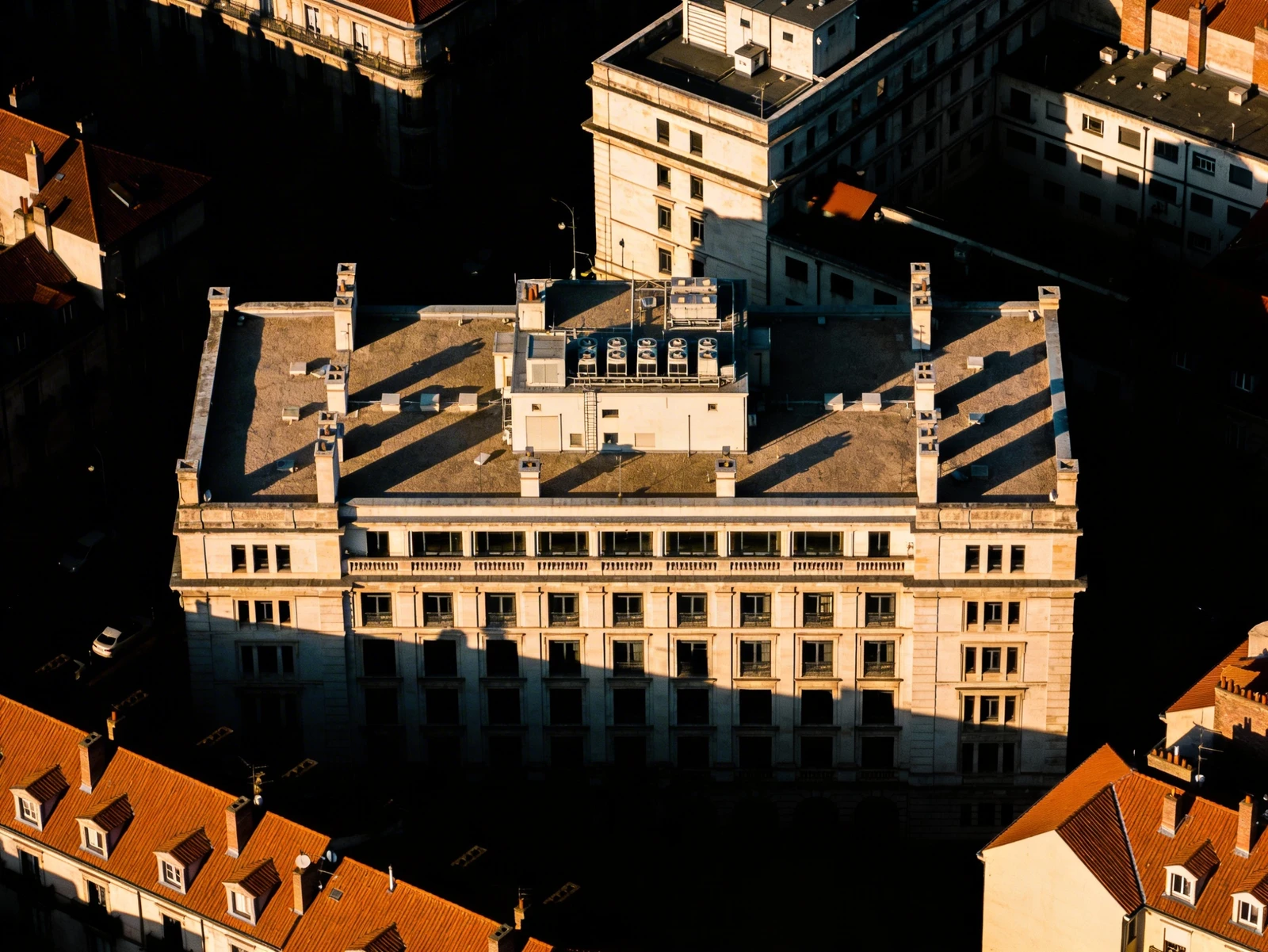
- Light as a material: A series of photographs or paintings studying how light defines space at different times of day.
- Urban textures: Collages that explore the visual density and rhythm of cityscapes.
These topics show that you are already thinking about the built environment critically and conceptually.
Step 3: Prioritize Process and Iteration
Architecture is an iterative process, and your portfolio should reflect that. The AP requirements actually encourage showing practice, experimentation, and revision.
When presenting your Sustained Investigation, include sketches, preliminary studies, and iterations that led to your final pieces. If you did a series of lino-cut prints exploring positive and negative space, show the initial sketches and the carved block, not just the final prints. This demonstrates that you understand design as a rigorous process, not just a spontaneous burst of inspiration.
Step 4: Showcase a Range of Media
While architecture relies heavily on digital tools today, admissions committees still deeply value traditional media. Your AP 2-D portfolio is the perfect place to show versatility.
Include a mix of photography, graphic design, charcoal, graphite, and mixed-media collage. Photography, in particular, is a powerful tool for aspiring architects; a well-composed photograph of a building or a streetscape shows that you understand framing, proportion, and scale. Avoid relying entirely on digital illustration; showing you can work with your hands is crucial for architecture school model-making.
Step 5: Master the Art of Curation and Sequencing
The way you arrange your portfolio is a design project in itself. If your portfolio is chaotic, reviewers will assume your design thinking is chaotic, too.
- Start Strong and End Strong: Place your most arresting, visually powerful piece first to grab attention. End with a piece that is technically accomplished and conceptually deep to leave a lasting impression.
- Pacing: Group works that speak to each other, whether through color palette, medium, or concept.
- Quality over Quantity: If a piece is weak, leave it out. A portfolio of 12 excellent pieces is always better than 15 pieces where 3 are mediocre.
Step 6: Write Clear, Insightful Commentary
The written component of your AP portfolio is excellent practice for the written statements required by architecture programs. Use this text to explain your intent, not just your process.
Don't just say, "I used charcoal to draw this." Say, "I used the heavy contrast of charcoal to explore how light defines the volume of the space." Use vocabulary that bridges art and architecture: talk about scale, proportion, void, massing, and rhythm.
By thoughtfully curating your AP 2-D Art and Design portfolio, you lay a strong foundation for your architectural education. You prove that you are not just a student, but a young designer ready to tackle the complexities of the built environment.
Building your portfolio doesn't have to be complicated. With Portfoliobox, you can create a stunning portfolio website in minutes — no coding required.